This week’s PowerPose brings together to core stability cultivated in Śalabhāsana, the back mobility fostered by Ustrasana, and the foundational strength developed with Aṣṭāṅga Namaskar . Ghaṇḍa Bheruṇḍāsana Prep or Chin Stand is a very challenging pose. It can take years of practice to be able to find this pose safely. It’s also a perfect example of how there is really no end to the complexity and challenge of the āsanas. To see the full expression of Ghaṇḍa Bheruṇḍāsana, or the the path you may follow if you master Chin Stand, see Light on Yoga plate 580. It’s rated a 56 on Iyengar’s scale, one of the most difficult postures included in his book.
This posture requires a lot of upper body strength and control. It can be easy to let tension pool at the base of the neck and in the traps. Maintaining a broad open back and engaging the shoulders away from the neck will help mitigate the tension and protect the neck.
Not all postures are safe for all yogis. Move carefully through these stages of Chin Stand. Stay with Option 1 if you have any issues with the neck or cervical spine. This supported variation provides plenty of challenge without compromising the neck. If you determine you are able to explore further, move mindfully and consider enlisting the help of an experienced teacher. If there is any discomfort or concern exit the posture immediately.
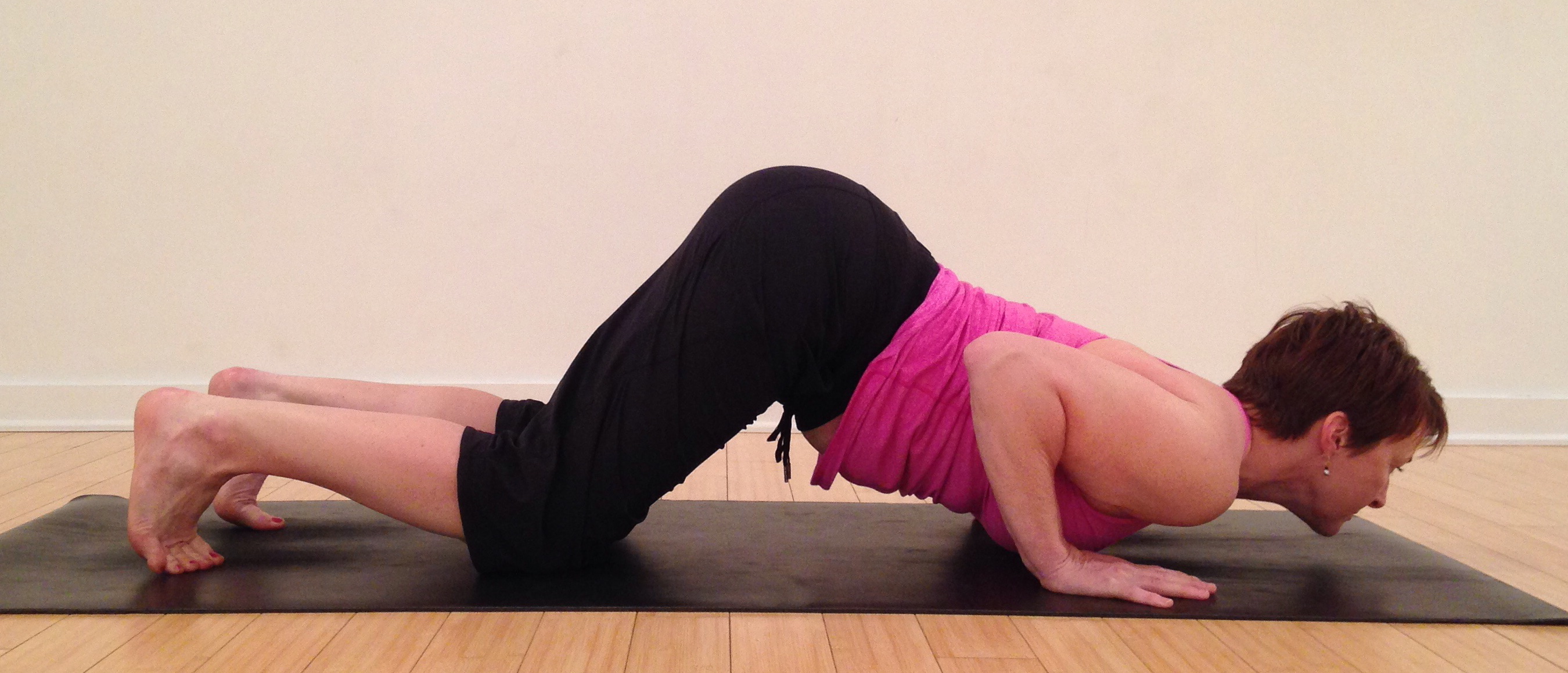
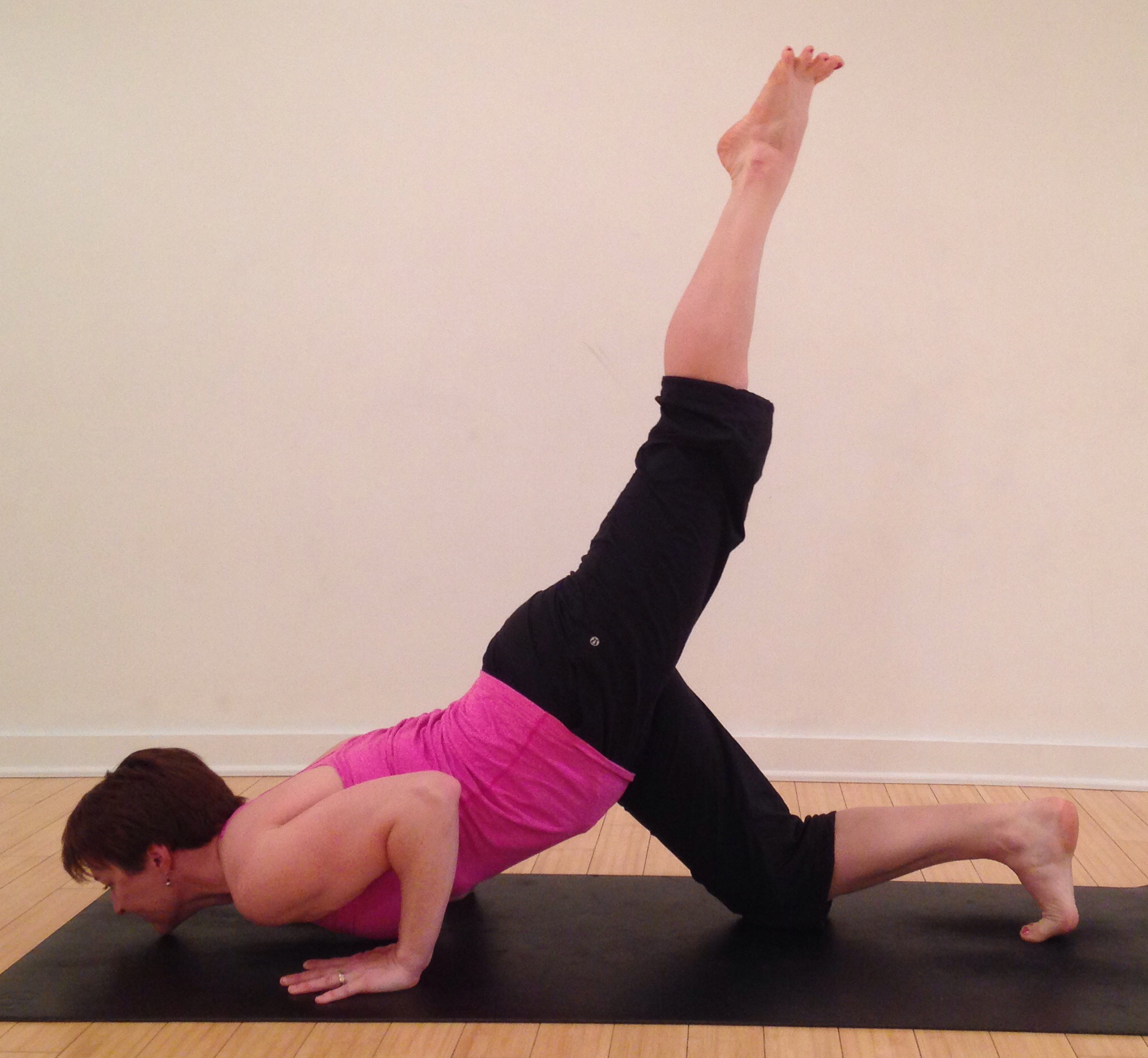 Option 1 – Chin Stand Push Up. From all fours. Lift one leg behind you, keeping the hips level. Hug the elbows in as you lower your heart in line with fingertips. Gently touch the chin to the mat. Bear little to no weight on the chin. Take several breaths as you hover in this position. Keep the shoulder heads broad and pull shoulders away from the neck. Lift the ribs away from the floor. For more challenge extend the bottom leg. Press back up keeping the elbows in line with the shoulders and wrists. This can also be practiced as a series of push ups. Exhale to lower and inhale to press back to the starting position.
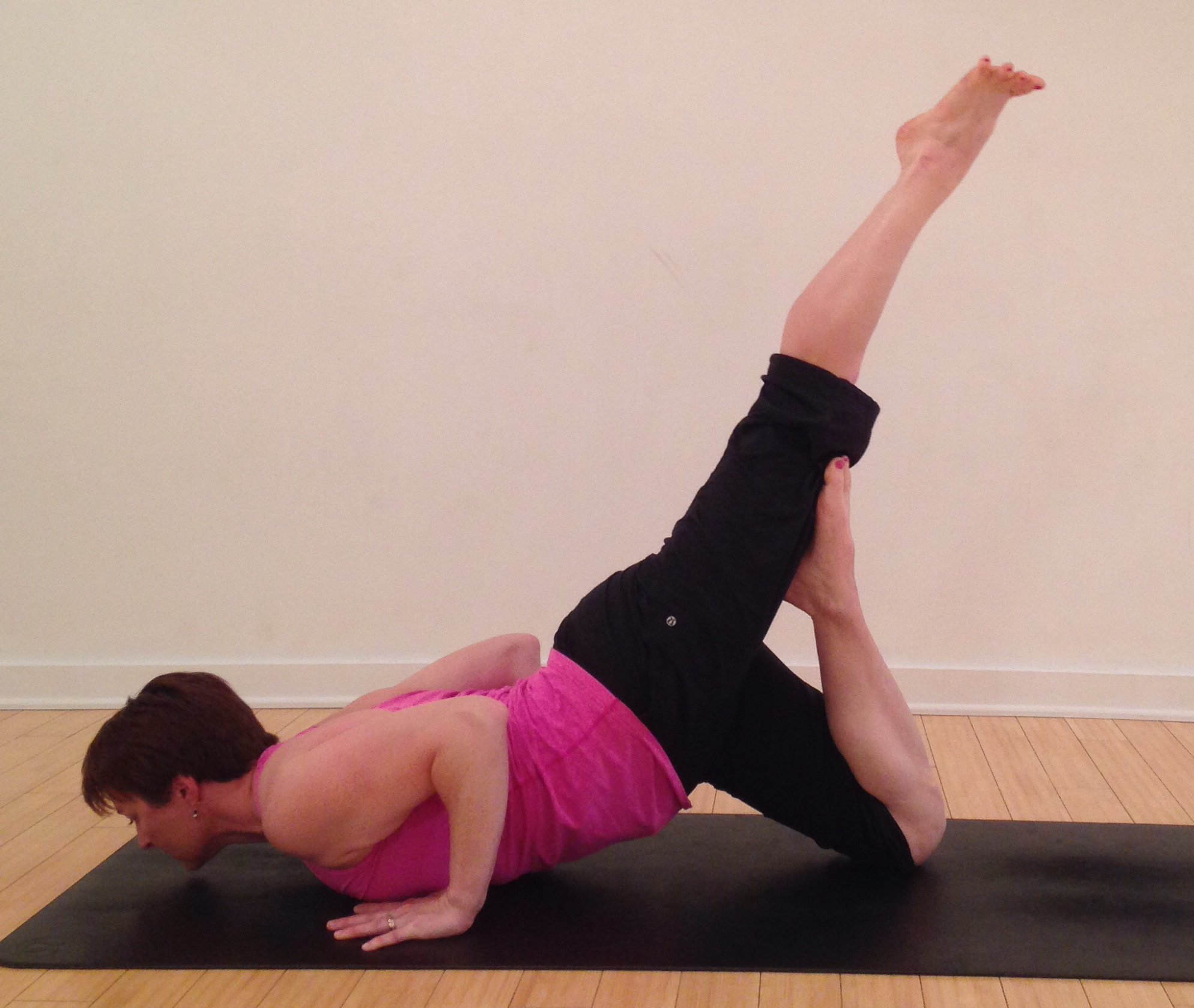 Option 2 – Mermaid Chin Stand. From Caturanga Daṇḍāsana, lower all the way to the belly. Make sure the hands are pulled back, in line with the ribs and the fingertips are under the armpits. Hug the elbows to the mid line of the body. Lift one leg as high as you can. Bend the knee of the bottom leg, place the foot under the top leg to support the lift. Do not press directly on the knee joint.
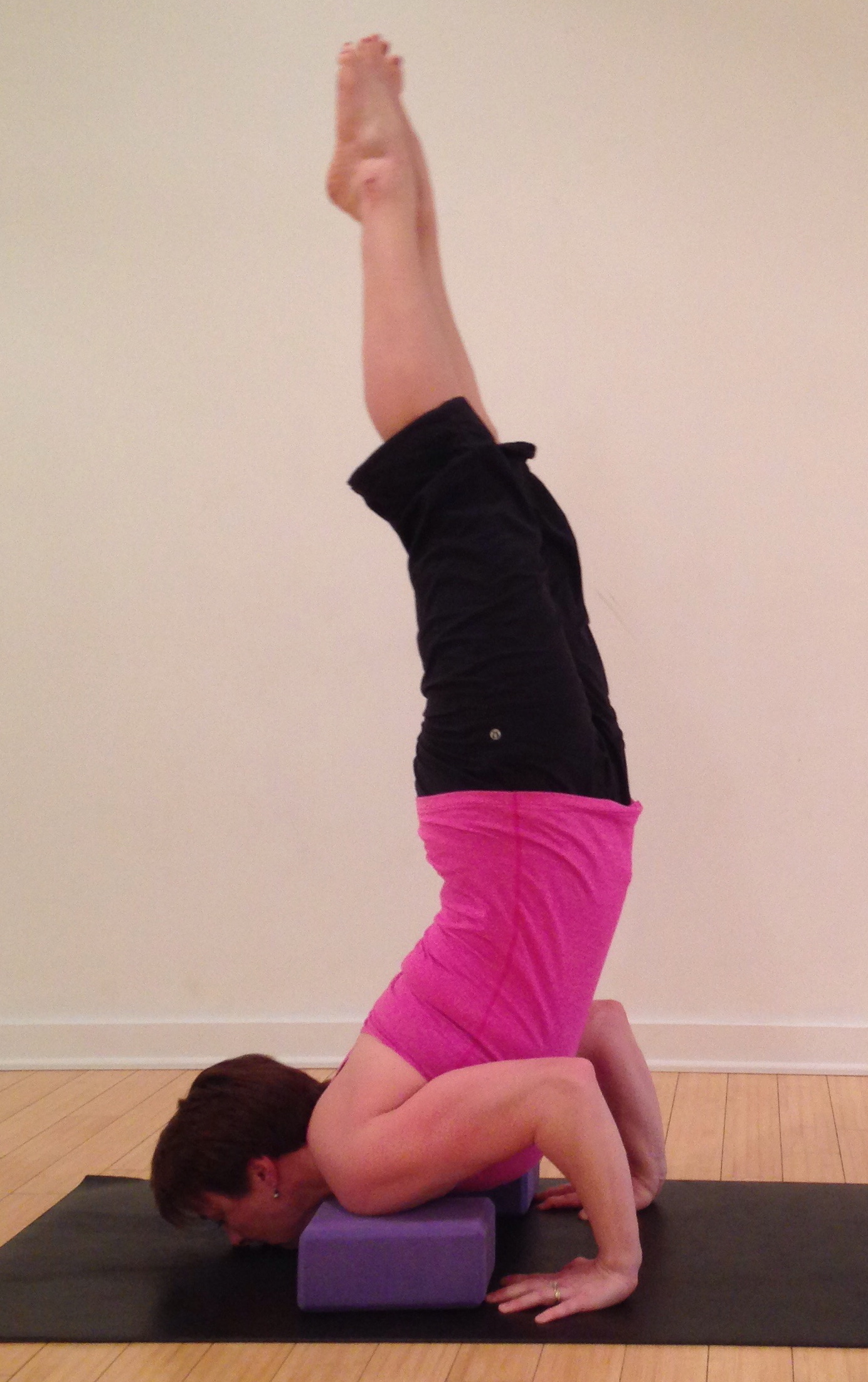 Option 3 – Supported Chin Stand. Place two blocks toward the top of the mat at shoulder width. Come to down dog with the tips of your middle fingers touching the blocks. Reach one leg behind you, keeping the hips square. Bend the elbows reaching the heads of the shoulders to rest on the blocks. Pull the shoulder heads broad and draw the traps away from the neck. Move the bottom foot closer to the elbow. Keep lifting into the posture or take a small controlled hop to lift the bottom leg. Reach the legs to the sky as you press away from the floor. The blocks will help support the body weight as you build strength and structure through the arms and chest. Exit by coming down one leg at a time.
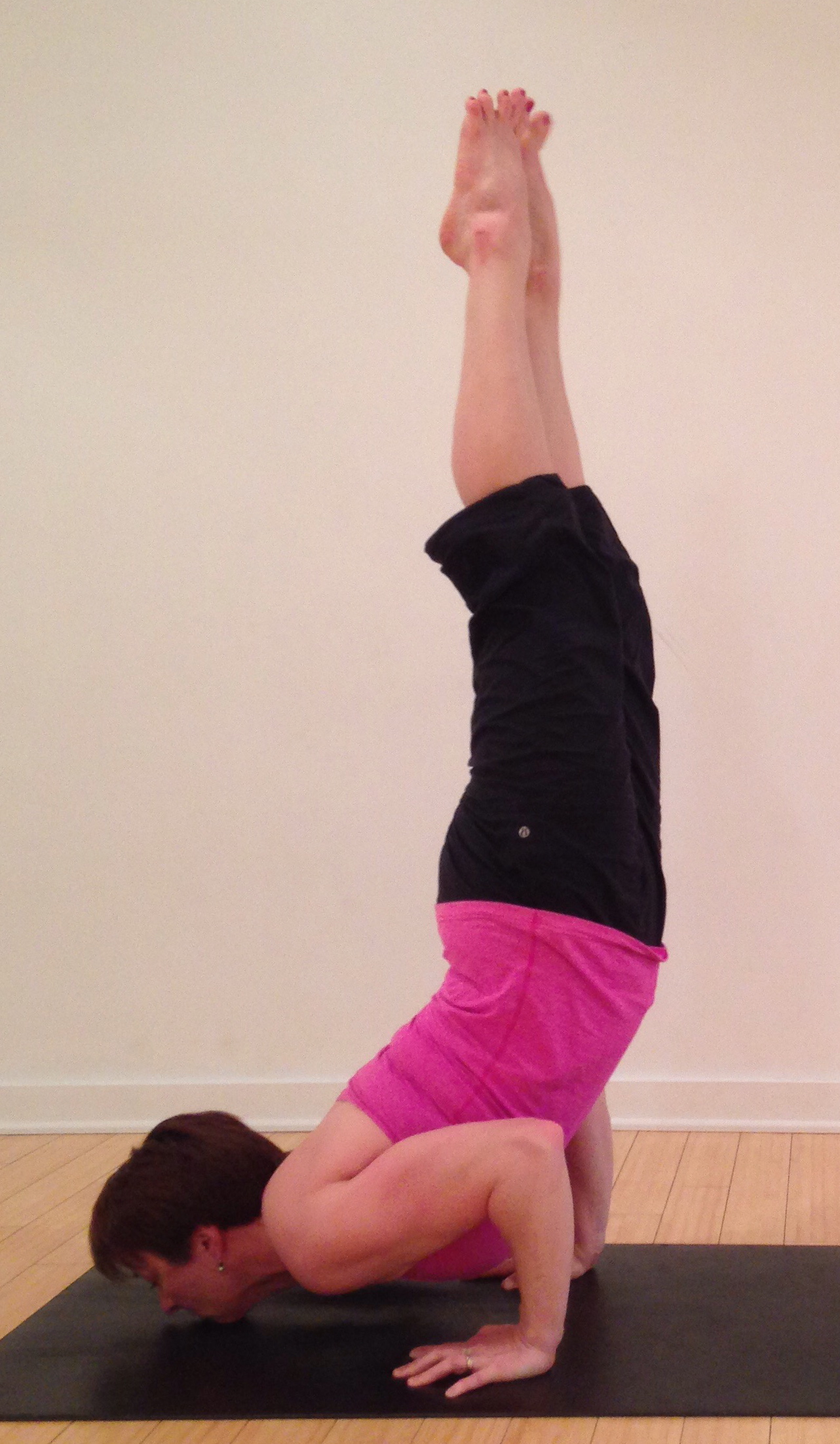 Option 4 – Chin Stand. From Option 1, move the bottom leg, with a bent knee as close to the elbows as you can. Raise the top leg as high as possible lifting the hips above the elbows. Fortify the torso by hugging the ribs. Keep lifting into the posture or take a small controlled hop to lift the bottom leg. Reach the legs to the sky as you press away from the floor. The upper body should bear the majority of the weight with the chin gently touching the floor. To exit, float both legs down and press the chest in line with the hips to Caturanga Daṇḍāsana.
Once you have mastered this pose, it can be incorporated into the flow. To heat up your practice insert a Chin Stand to your Vinyasa or Sun Salutation in lieu of Caturanga Daṇḍāsana and Ūrdhva Mukha Svanasana.
As always work where you are keeping your body safe and finding the right level of challenge for you. Follow this #PowerPose challenge @suzannewrightyoga on Instagram or at Suzanne Wright Yoga on Facebook. If you post your pictures or about your experience be sure to tag #PowerPose and @suzannewrightyoga.



 suzanne wright yoga