Leave a comment

#PowerPose 24 – Yoga Daṇḍāsana

Yoga Daṇḍāsana or Grasshopper Pose is our peak pose for this series.  The twisting and hip opening that we’ve practiced with Parivṛitta Utkaṭāsana, Dwi Pāda Kouṇḍinyāsana, and Eka Pāda Rājakapotāsana have created the foundation, so hopefully you feel ready to explore.  One of the best things about this pose is the deep twist you can experience.

While the name might tempt you to hop into the pose, be sure to move slowly and deliberately.  Jumping or launching into the pose can be harmful to the shoulders and can be too jostling for sustaining the pose and maintaining the breath.

Try these stages and variations for Grasshopper:
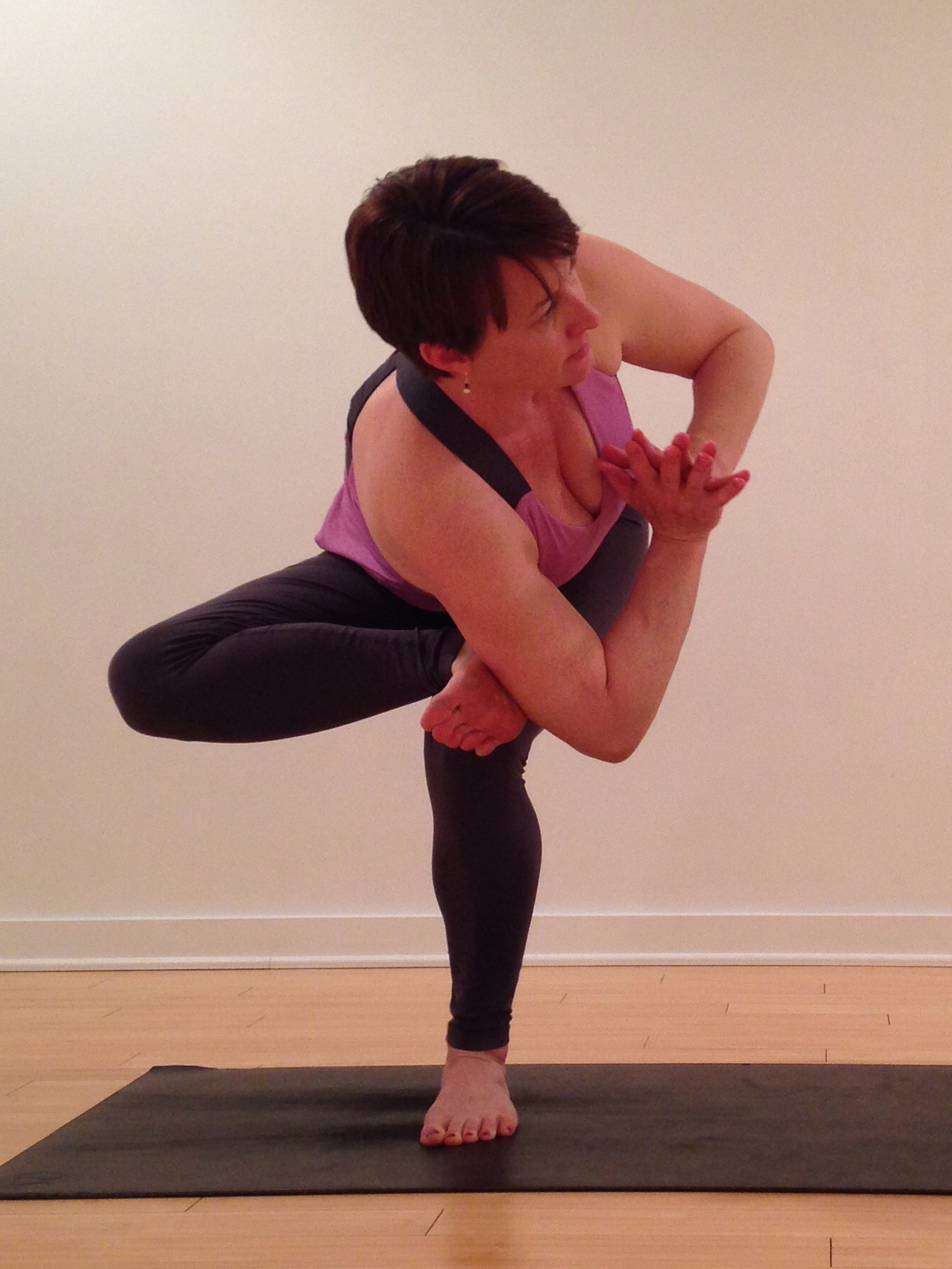
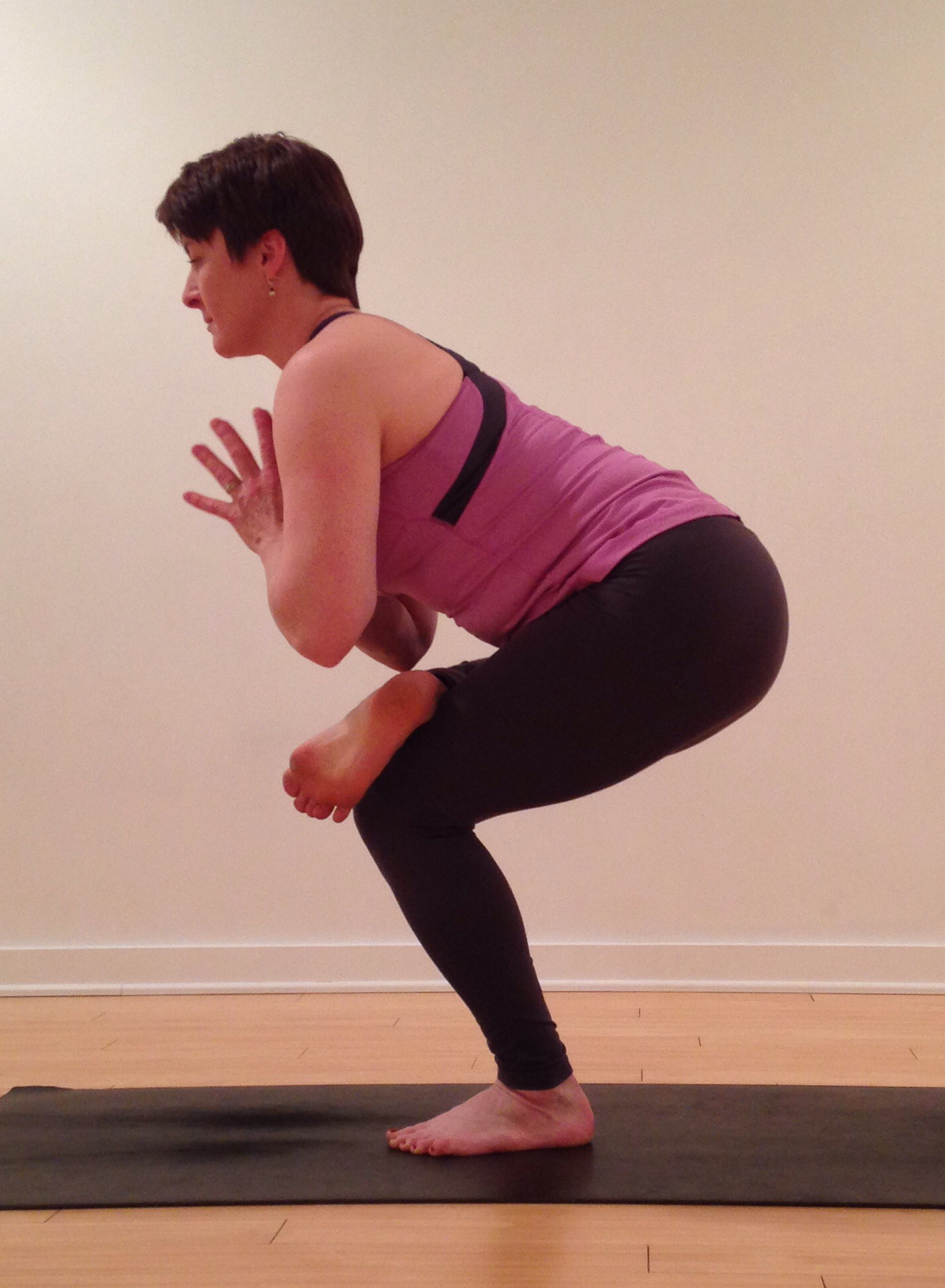
IMG_1577Option 1:  Standing Pigeon Twist – From fierce pose with pigeon, twist in the direction of the top foot.  Press the elbow into the arch of the foot, keeping the foot stable.  Keep working the twist until you can get the triceps braced on the arch of the foot.  If balance is an issue, work next to the wall for stability.  You can also work on this twist from the seated pigeon variation.  Be sure not to put on any lotion or balms as this makes it difficult to find secure placement of the foot.

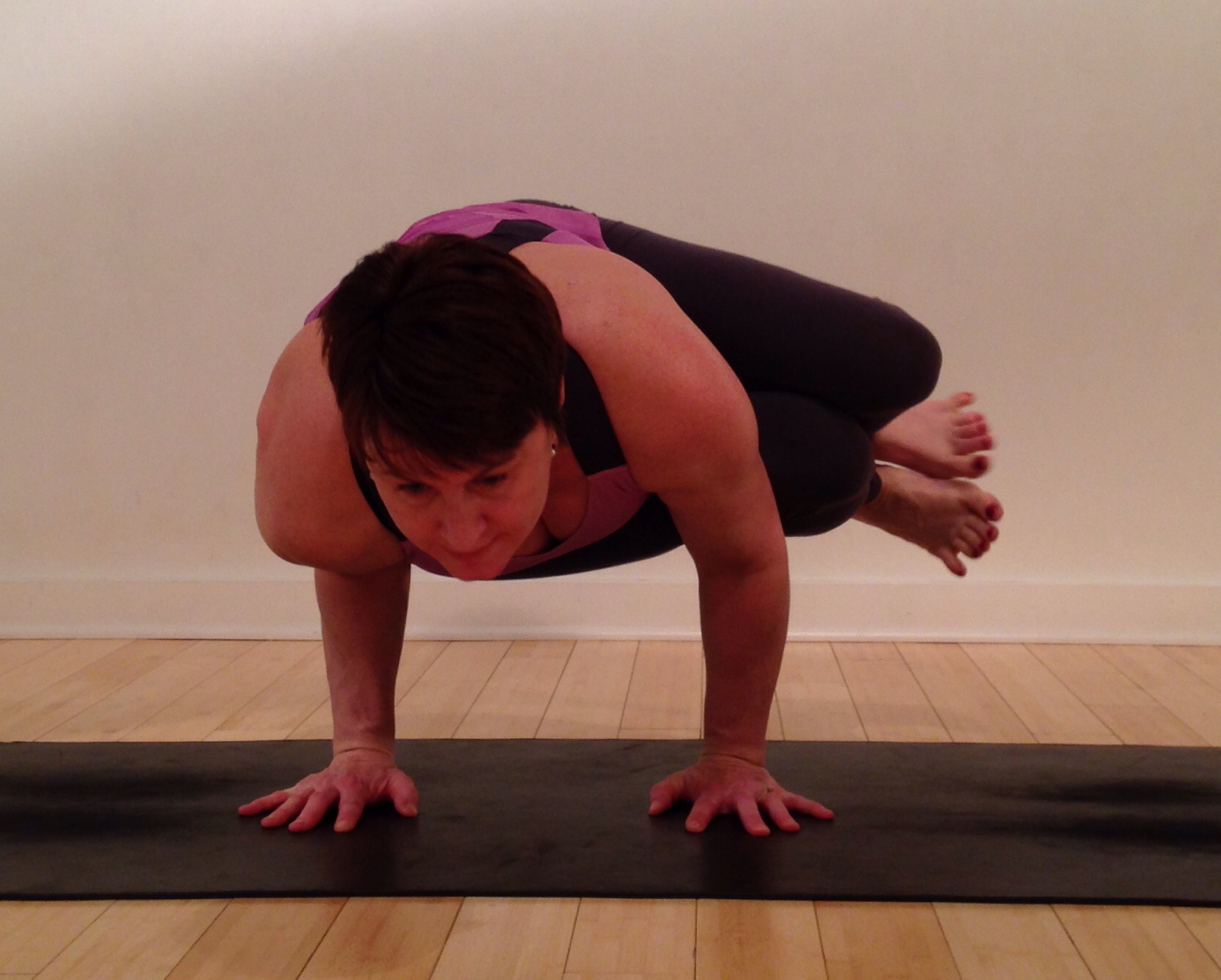
IMG_1584Option 2:  Grasshopper Prep – When the foot is securely anchored to the triceps, bend the bottom leg and lower to your hands.  Place the hands just wider than shoulder width. Shift the heart forward to bring more weight in the hands, bend the elbows slightly, maintain the twist, the connection of the foot, and lift through the low belly.

IMG_1585Option 3:  Hip Hopper –  When you are ready, reach the heart further forward, scoop the belly, bend the elbows back, and lift the bottom leg from the floor.  The back leg can rest on the triceps or it might float.  If you find that it’s difficult to maintain the twist when the feet leave the ground, go back a step or two and try to increase the range of the twist.  Slippy pants can add a higher degree of difficulty, so keep that in mind when you get dressed to practice.

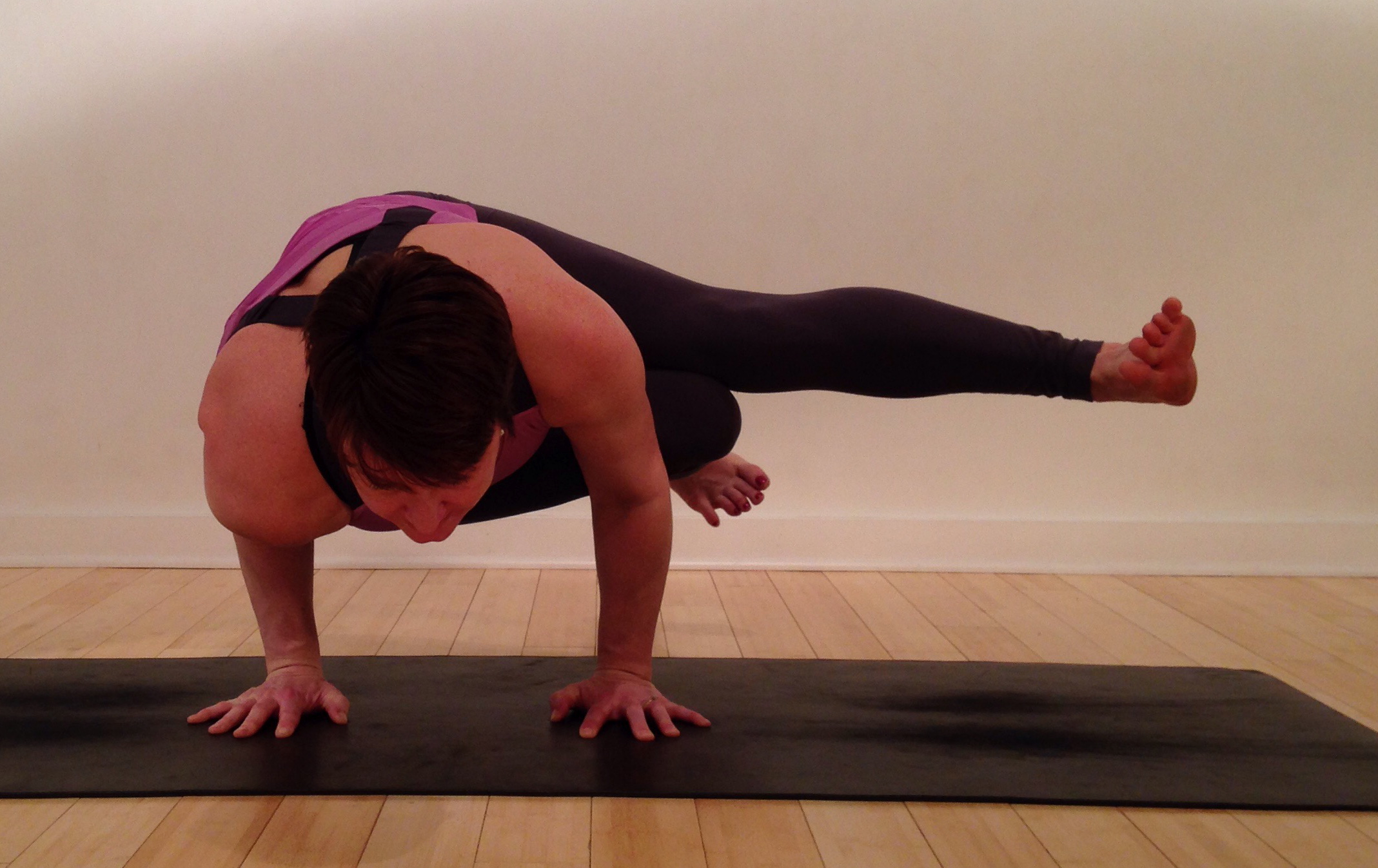
IMG_1579Option 4:  Grasshopper – Extend the bottom leg away, trying to keep it parallel to the floor.  Press the foot into the triceps for lift and to deepen the twist.  Keep reaching the heart forward and lifting through the belly using uddiyana bandha to create flight in the pose.  Many yogis are surprised at how stable this balance can feel, because you are basically stepping on the shelf created with the arms.

There’s a lot going on in this pose, so if it doesn’t come together right away, keep working on twisting, hip opening, and bearing weight on your hands.  Follow this #PowerPose challenge @suzannewrightyoga on Instagram or at Suzanne Wright Yoga on Facebook.  If you post your pictures or about your experience be sure to tag #PowerPose and @suzannewrightyoga.
1 Comment

#PowerPose 23 – Eka Pāda Rājakapotāsana

One of my favorite poses to say in sanskrit, Eka Pāda Rājakapotāsana or One-Legged King Pigeon Pose is our focus for the week.  We’ll combine this yummy hip opener with our previous two twists for a funky arm balance next week, so stay tuned!

Think about how much time we spend tightening up our hips by chair sitting, physical activity, or retaining emotional energy.  That should give you an idea of how much time we’ll need to reverse the tightness.  There’s no instant cure for tight hips, commit to long holds and calm breath to release tension and create mobility.

Try these variations of Pigeon to open the hips.  If you are really tight, stay in the posture for up to 5 minutes on each side (with the exception of the standing variation).

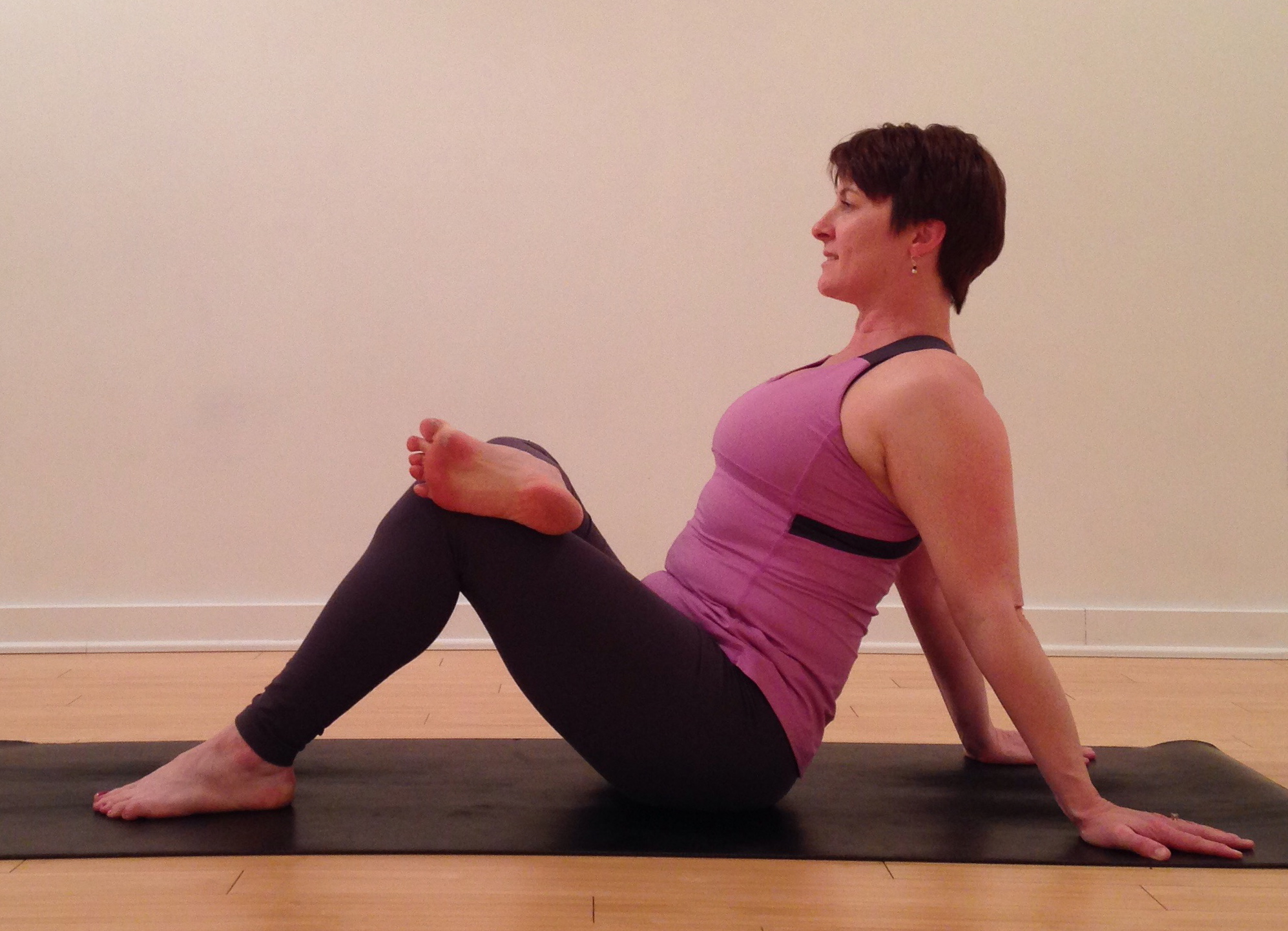
IMG_1570_2Option 1 – Seated.  The great thing about this variation is that it makes it easy to keep the hips grounded and there’s little pressure on the knee joint.  From a seated posture, bend the knees and step the feet to hip distance.  Keeping the back long, flex the foot and cross it over the opposite thigh.  Keeping the foot active and the hips grounded, gently reach the knee away from chest.  Move the bottom foot closer to the tail for more intensity and move it way for less.

IMG_1565_2Option 2 – Standing.  Stand with the feet at hip distance, shift weight to one foot, flex the other, and cross the ankle over the thigh, above the knee.  Sit the hips back as if you are in Utkaṭāsana.  Keep the lifted knee heavy, working the shin parallel to the floor.  Hands can be at the heart or overhead for more intensity.

IMG_1553_2Option 3 – Upright.  From down dog, bring one knee forward and set it just outside the same wrist, bringing the shin and thigh to the ground.  As much as the knee allows bring the shin forward.  Keep the back toes tucked, with the knee pointed toward the floor.  Walk the hands back to stack the shoulders over the hips.

IMG_1560_2Option 4 – Surrender.  Untuck the back toes and let the back leg be soft, keeping the knee pointed down.  Walk the arms forward taking the forearms to blocks, to the floor, or walk all the way out, so the chest rests on the thigh.  If needed, place a blanket under the hip of the forward leg for support and freedom to surrender into the pose.

If you have knee issues, move carefully through these postures.  Work first on the seated variation and mindfully decide if the others will serve you.  Try to isolate the work in the hips, keeping the rest of the body calm.  These postures can also be integrated into your everyday life.  Practice a variation while talking to your kids, watching TV, reading a book, or perusing the apps on your phone.

Follow this #PowerPose challenge @suzannewrightyoga on Instagram or at Suzanne Wright Yoga on Facebook.  If you post your pictures or about your experience be sure to tag #PowerPose and @suzannewrightyoga.

1 Comment

#PowerPose 22 – Dwi Pāda Kouṇḍinyāsana

With the nice weather comes a lot more outdoor activity.  The number of cyclists and runners on the roads and trails has dramatically increased in the last couple of weeks. This week’s Power Pose Dwi Pāda Kouṇḍinyāsana, provides a challenging counter-balance to this type of activity and will definitely make you aware of your lliotibial Band.

Better know as the IT Band, this bundle of fibrous tissue runs along the outside of the thigh, providing a connection point for muscles and works to help stabilize the knee and hip.  These activities that we love, and the activities we endure (like sitting at a desk or in a car for long periods) can cause IT Band overuse and pain.

For your best experience with this posture, be sure to stretch your IT Band first.  A forward fold with crossed legs is great way to target this area.  For one of my favorites, come to all fours, reach one leg long and cross it over and behind the opposite leg, taking the toes to the floor.  Square the hips, then gaze over the shoulder toward the foot. Stay for 5-10 breaths and practice this one regularly.

Once you’re warmed up and read to go, try these variations.  Be sure to engage uddiyana bandha and come into the pose with a big reach of the heart.

IMG_1473_3Option 1 – Parsva Bakasana.  The foundation of this week’s pose is side crow which we’ve worked on before.  Focus on finding a big twist, rooting the bottom leg to the tricep, and confident flight.

IMG_1476Option 2 – Top Leg Extension.  Any time the form changes in arm balance, the delicate equilibrium can be compromised.  Moving slowly, keep the knees glued together, reach the top leg long, make sure the bottom leg stays securely connected to the tricep.  If you slip during the extension, reset, find a deep twist, then reaffirm the thigh on the tricep.

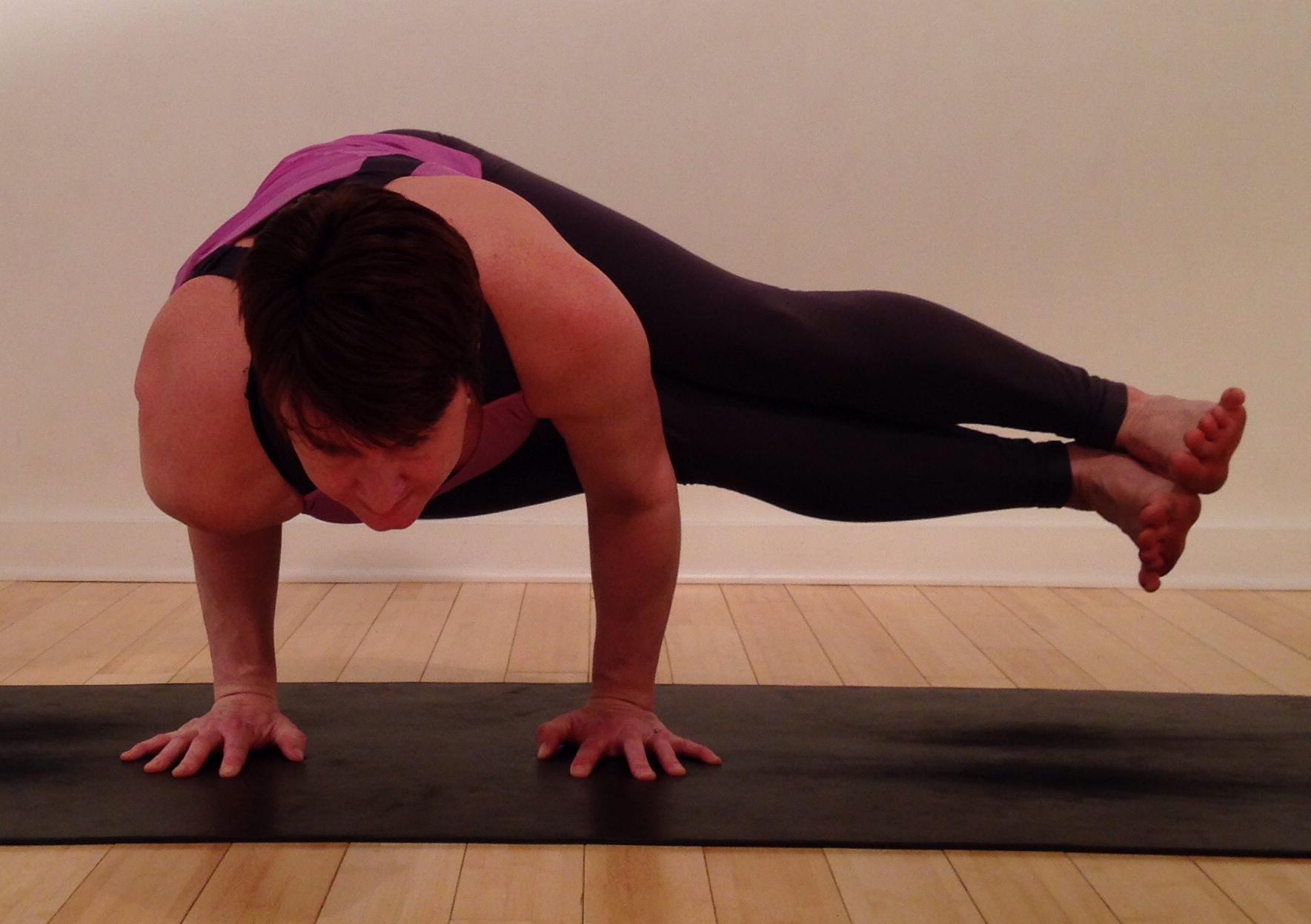
IMG_1475Option 3 – Two Leg Extension.  Slowly extend both legs.  Flex the feet and spread the toes.  Position the feet like they are stepping on a flush surface.  Press through the balls of the feet as you draw the outside edges back.  The legs do not have to completely extend.  If you reach a point where you feel the limitation of the IT band, back off to the point where there is a gentle stretch.  Work to open the IT Band, so you can achieve maximum extension.

IMG_1470Option 4 – Float the Hip.  This variation can actually be a little easier then rooting both elbows to the body.  The slightly wider stance of the hands allows more room for the twist and the reach of the heart.  Try to get the legs parallel to the floor.  This may require a slight dropping of the hips which will deepen the twist.

For many yogis, there’s a strong desire to skip past this two-footed version of Kouṇḍinyāsana and move to other flashier versions.  But, if you stay and do the work it will make all of the variations of the posture more accessible and sound.  In the words of Pattabhi Jois, “Practice and all is coming.”

Have a little fun this week opening the IT Band and playing with this pose.  Follow this #PowerPose challenge @suzannewrightyoga on Instagram or at Suzanne Wright Yoga on Facebook.  If you post your pictures or about your experience be sure to tag #PowerPose and @suzannewrightyoga.