One thing Thanksgiving teaches me is how much I appreciate balance. Like most everyone in the U.S., our family ate a little more than usual, stayed up a little later, and generally got a little out of whack. We had a great time, but celebrating and partying can’t last forever, it’s important to come back to moderation and balance.
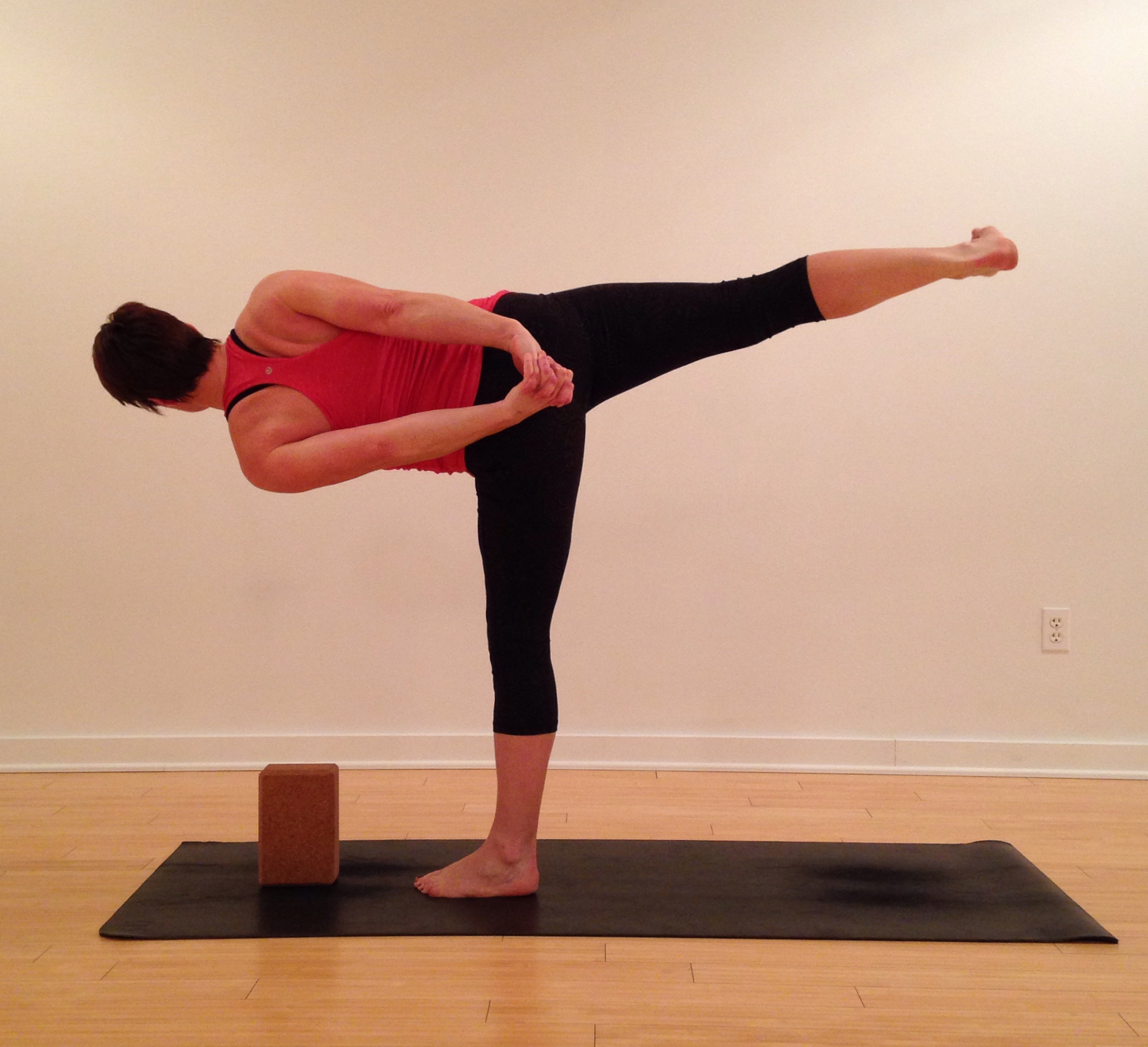
Ardha Chandrasana or Half Moon Pose is a great tool for exploring balance. This is a literal balancing posture, since you are relying on only one leg, but the experience of balance goes much deeper. While strength and flexibility are required, there’s also a softness and surrender that animate this pose.
Balancing on one leg, opening the hamstrings, opening the hips, and creating reaching, vyana energy, are all key components to focus on for this posture. Here are a few options to cultivate and challenge your Half Moon practice.
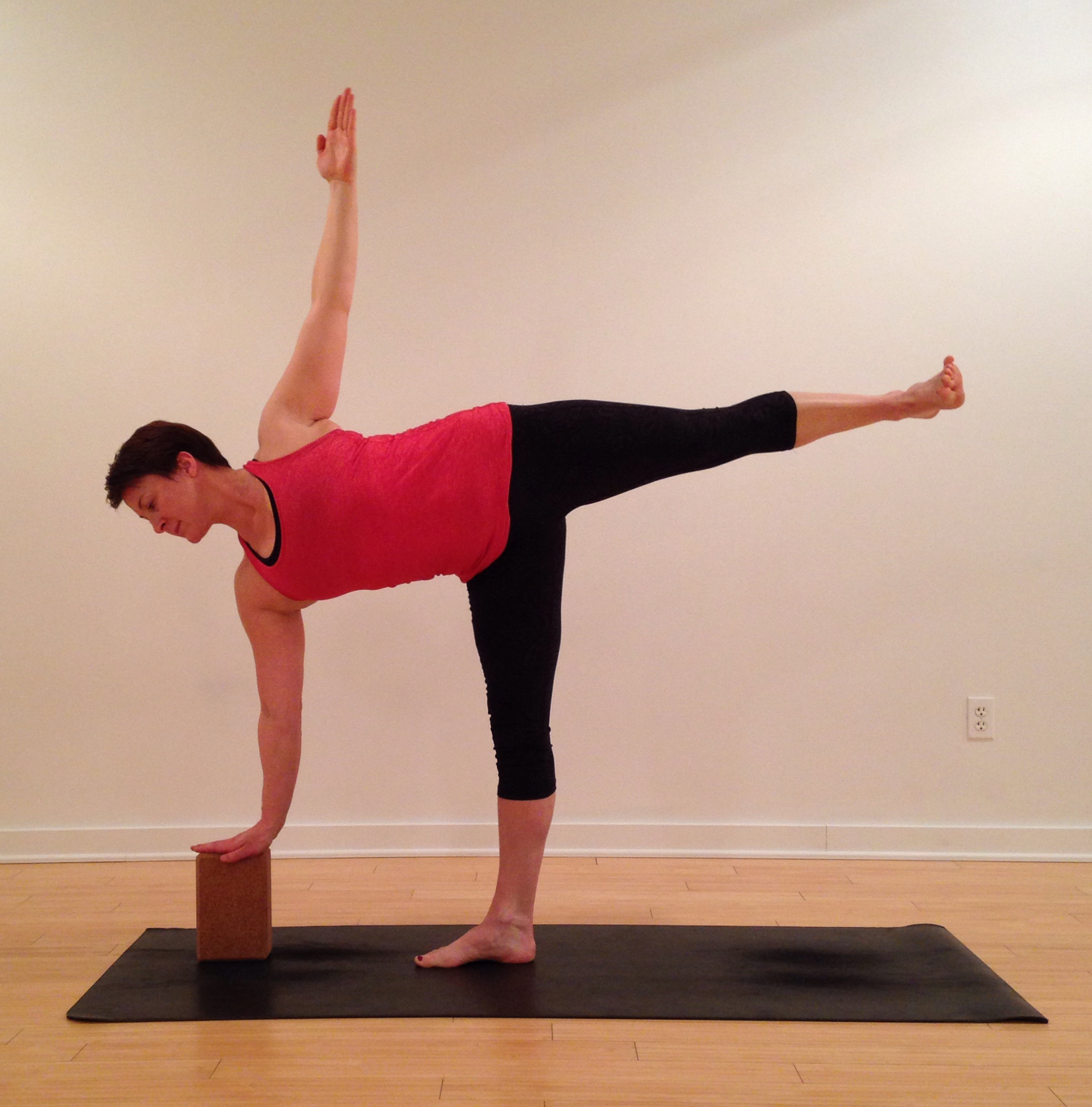
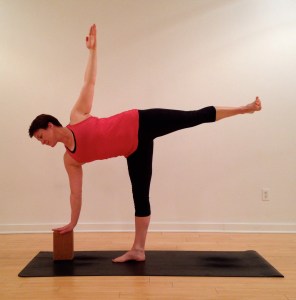 Option 1 – Ardha Chandrasana with the block. To build stability in this pose, use the block for support. Begin in Trikonasana or Triangle Pose, soften the front knee, shift the weight forward and bring your hand to the block just under the shoulder. With the hand rooted to the block, focus on creating a solid base with the bottom leg and foot. As you reach the top leg back. Try to keep the hips as open as they were in Triangle. Over time the leg will hover parallel to the floor and the hips will stack. Keep long active legs a priority over how high you can reach the back leg. Radiate from hand to hand and from crown through the top foot.
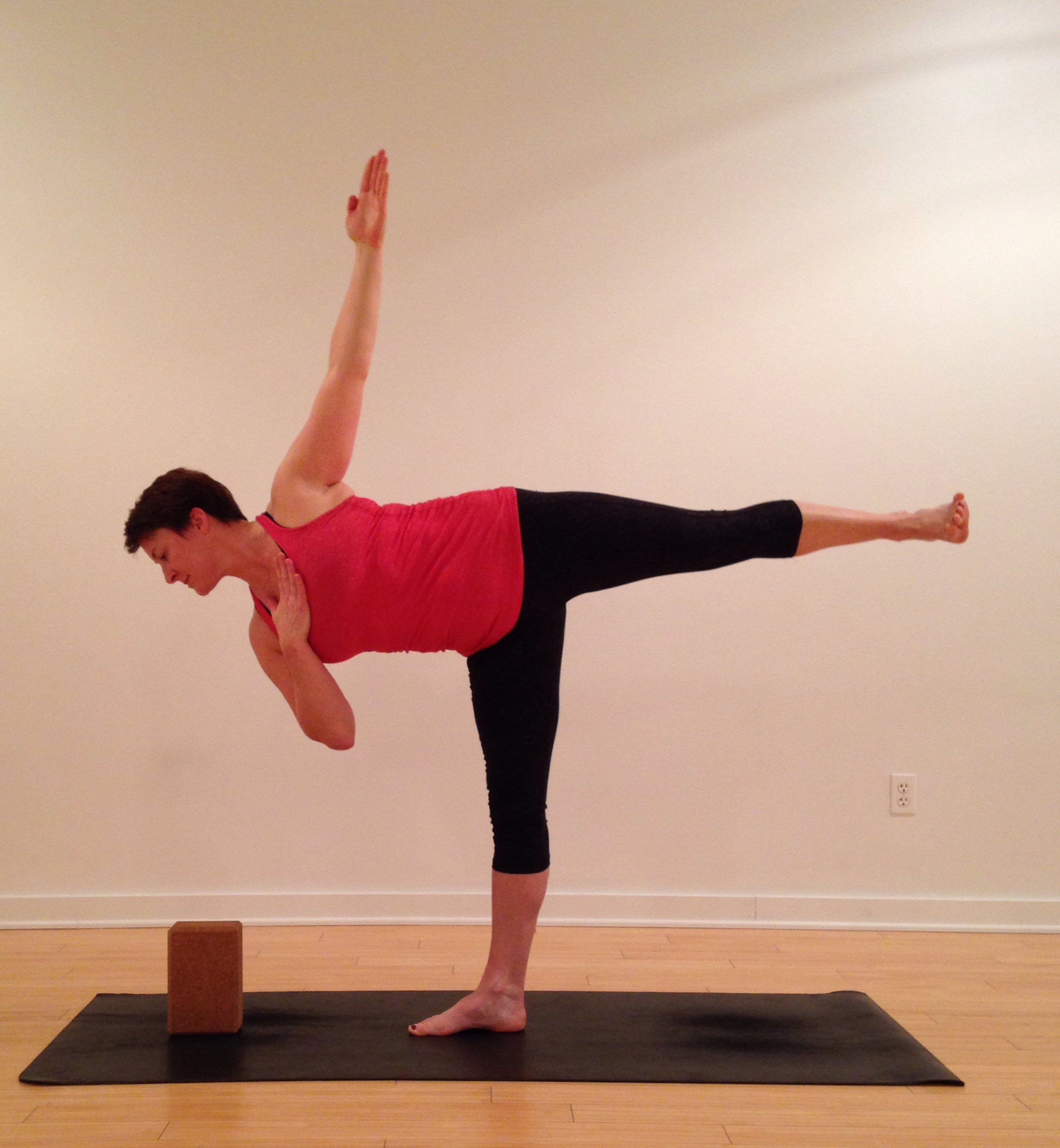
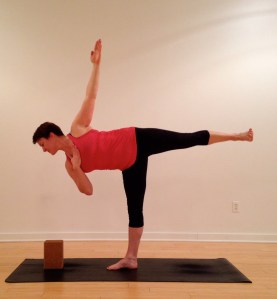 Option 2 – Ardha Chandrasana floating the bottom hand. When you feel stable and open in option 1, work to lessen your dependency on the block. Lift the side body away from the floor, using your obliques, lessen the pressure on the block until you can come to finger tips. Keep working until you can float the hand completely away from the block. Try taking the bottom hand to your heart. Lift the side body, so it is even with the back leg, creating one long line. It’s common for the back leg to droop as you make this transition, so be mindful of the activity and lift, reestablishing the position of the leg if needed.
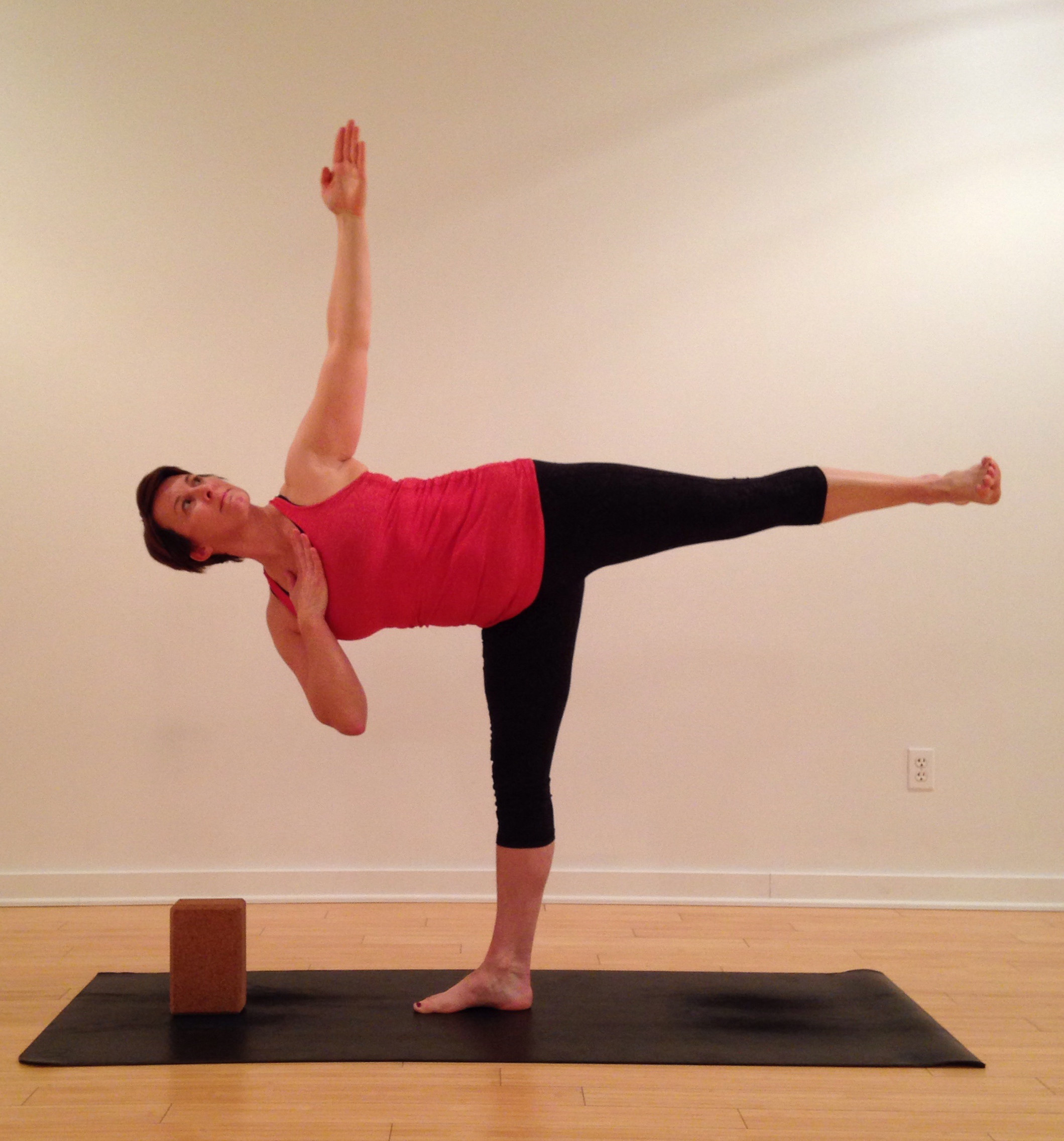
 Option 3 – Ardha Chandrasana with a different drishti. The drishti of this pose starts with the gaze at the bottom hand. To create more challenge, change your gaze, eventually bringing the drishti to the top hand. For even more challenge, soften the gaze and bring the drishti to your third eye. Work until you can do this with the eyes completely closed. You may notice that the change of the drishti is very easy some days and somewhat impossible on others. Try to stay in the moment and appreciate where you can work on the day-to-day basis.
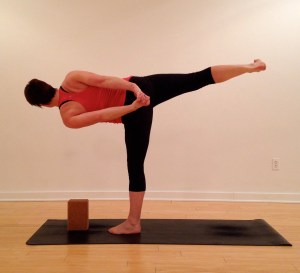 Option 4 – Ardha Chandrasana with hands clasped. This variation can be added after option 2 or 3. Clasp the hands behind the back. This can be done in Triangle before coming into the pose or when you are already in Half Moon. If the shoulders are tight reach for the elbows, pulling the shoulder heads back to open the heart.
Play with the balance of the work and reach of the physical body. Work to flow in an out of the pose as if you are sandwiched between two plates of glass. As you work, bring balance to the posture with the fluidity in your movement and softness in your breath, thoughts, and intention.
As you explore Ardha Chandrasana this week, be sure to work where you feel challenged, but also where you can breath and relax around the work. Follow this weekly challenge @suzannewrightyoga on Instagram or at Suzanne Wright Yoga on Facebook. If you post your pictures or share about your experience be sure to tag #PowerPose and @suzannewrightyoga.
 This is my favorite vegetarian substitute when I make Chicken Parmesan for the family. It’s really quick and easy to make. Most of the ingredients are probably sitting in your pantry and fridge right now. The heartiness of the garbanzo beans really creates a comforting dish for a cold winter’s day. If there are any leftovers, they make a tasty warm sub sandwich with a some sauce, a little cheese sprinkled over top, and some spinach or arugula. Just toast the sandwich in your toaster oven or heat under the broiler.
 1. Preheat the oven to 375*. Line a baking sheet with parchment paper.
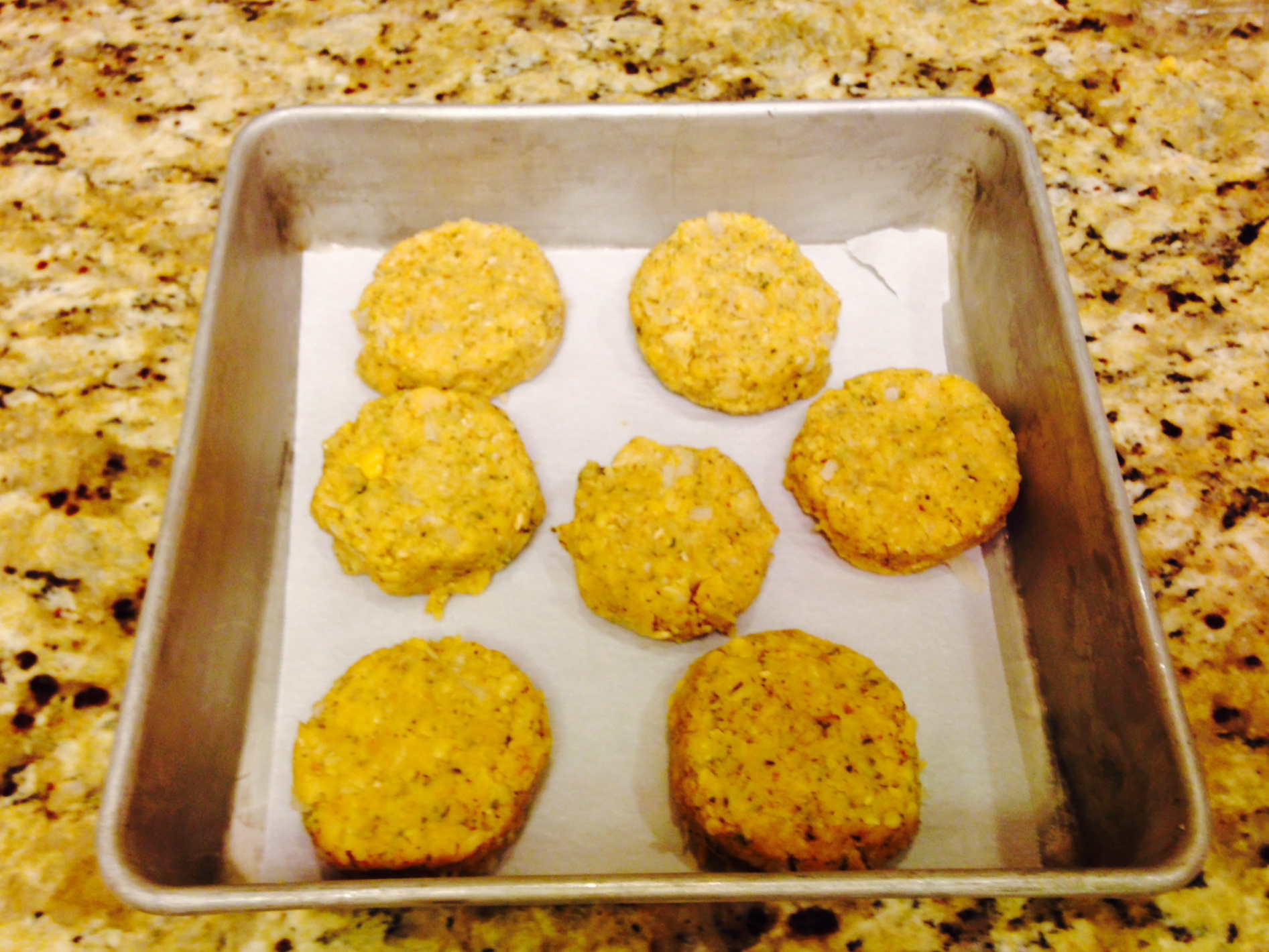 3. Bake for about 20 minutes. Remove from the oven, ladle 2-3 tablespoons of sauce on eat chickpea cake. Sprinkle with Parmesan cheese.


 suzanne wright yoga