It’s officially Fall! The swirling vata energy of the season might have you craving or even demanding a little grounding of your energy. This is the perfect time to bring your practice low to the ground. Reclined and seated poses allow us to feel stable and secure as we open and strengthen the body. The good news is that if we can plug in and root down, we can harness the electricity in the air for creativity and innovation.
In this week’s PowerPose, Supta Pādānguṣṭhāsana or Reclined Big Toe Hold, grounding through the bottom leg is a key component. This pose also encourages open hamstrings, open hips, and creating space through the chest.
Try these variations and stages of Supta Pādānguṣṭhāsana:
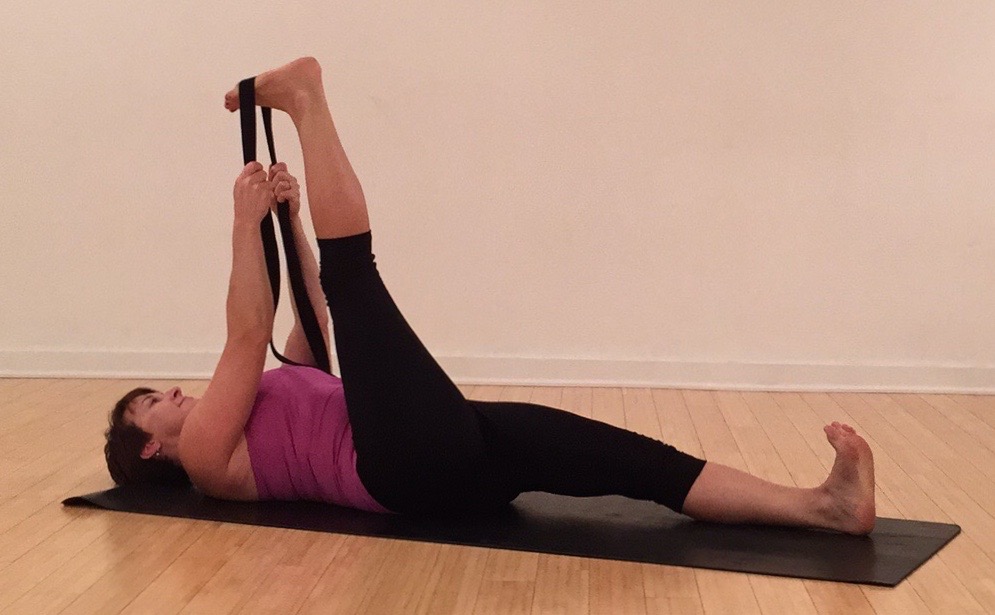 Option 1 – With a Strap. Recline with legs long and about hip distance apart. Flex the feet. Hug one leg to the chest and place a strap around the ball of the foot. Extend the leg. If needed there can be a soft bend in the knee. Use enough of the strap, so the chest stays broad and the shoulder blades are flush to the mat. Allow for a little slack in the elbows. Ground through the heel of the opposite leg and work to press the back of the leg to the mat. If this adds strain to the low back, place the foot on the earth, keeping the bottom knee bent. Work to decrease the amount of strap needed to extend the leg completely.
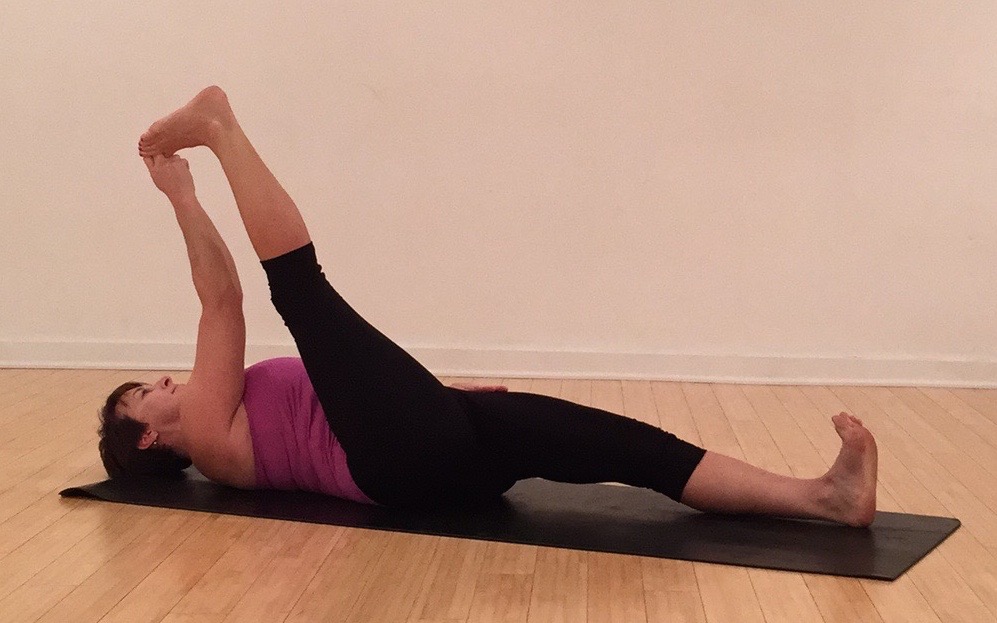 Option 2 – Big Toe Hold. From the reclined position, draw one knee to the chest and with the same hand as the leg, hold the big toe. Reach the pointer and middle fingers in between the big and second toe, press the fingers on the toe pad. Press the thumb gently into the toenail. Create a confident grip on the toe. Extend the leg, keeping the bottom reaching for the ground. To help secure the bottom leg, place the same hand as the leg on the thigh to encourage rooting. For added challenge, lift the heart toward the shin, using the core. If you notice tension in the jaw or strain in the neck, reset and try again.
 Option 3 – Hug the Shin. From option 2, draw the leg across the chest. Hold onto the foot and knee as you pull the shin close to the chest. Maintain the grounding of the bottom leg. As much as the knee allows, draw the shin parallel to the collarbone. This should feel like a Pigeon Pose or Eka Pāda Rājakapotāsana. Work to find a nice deep stretch through the hip of the hugged leg. If the shin is close enough, you can wrap the arms around the leg, clasping the hands in front of the leg for leverage. Add the lift of the heart for the additional core challenge.
 Option 4 – Overhead Bind. From Option 3, reach the arm of the hugged leg behind the head. The hand will reach toward the opposite ear. If possible hold the big toe and reaffirm the shin hugging toward the chest. If needed, use the free hand on the foot to coax the leg toward the chest. If you are unable to reach the big toe, use a strap or binding ring to bridge the gap. Most likely you will have to reach the heart toward the shin to find the bind. Once you have a firm grasp on the foot or strap, press the back of the head into the forearm or bicep to encourage further opening of the shoulder.
Finding comfort and support while working closer to the ground this time of year can be very balancing and therapeutic. Grounding postures like Supta Pādānguṣṭhāsana can provide the same benefits when we encounter swirling vata emotional energy throughout the year. As you practice, find the right challenge, but also plug into what you need to encourage balance.
Follow this #PowerPose challenge @suzannewrightyoga on Instagram or at Suzanne Wright Yoga on Facebook. If you post your pictures or about your experience be sure to tag #PowerPose and @suzannewrightyoga.



 suzanne wright yoga