1 Comment

#PowerPose 18 – Camatkārāsana

There comes a time during practice when you are ready to just bask in the warmth, energy, and awe of the union that you’ve created with the practice.  One of my favorite poses to break out for this is Camatkārāsana or Wild Thing.  Camatkāra translates to “producing wonder” or “astonishment”.  Yoga Journal defines the pose name as “the ecstatic unfolding of the enraptured heart”.  It makes you want to experience the pose right now, doesn’t it?  Keep this pose in mind the next time you are ready to bust open your heart.

Sometimes called “flipping your dog” (not quite as poetic), this heart opener is also a great counter to a practice with a lot of core work or coiling actions, which we find regularly in Power class.  While it’s less intense than some backbends, it’s still important that your spine, shoulders, and front body are prepped and ready to be ecstatically opened along with the heart.  Supporting the body on one arm and shoulder, and transitioning into the pose can be challenging.  If you have any shoulder or rotator cuff issues you should avoid this posture.

Try these stages of the pose to explore producing wonder and astonishment with your yoga practice.

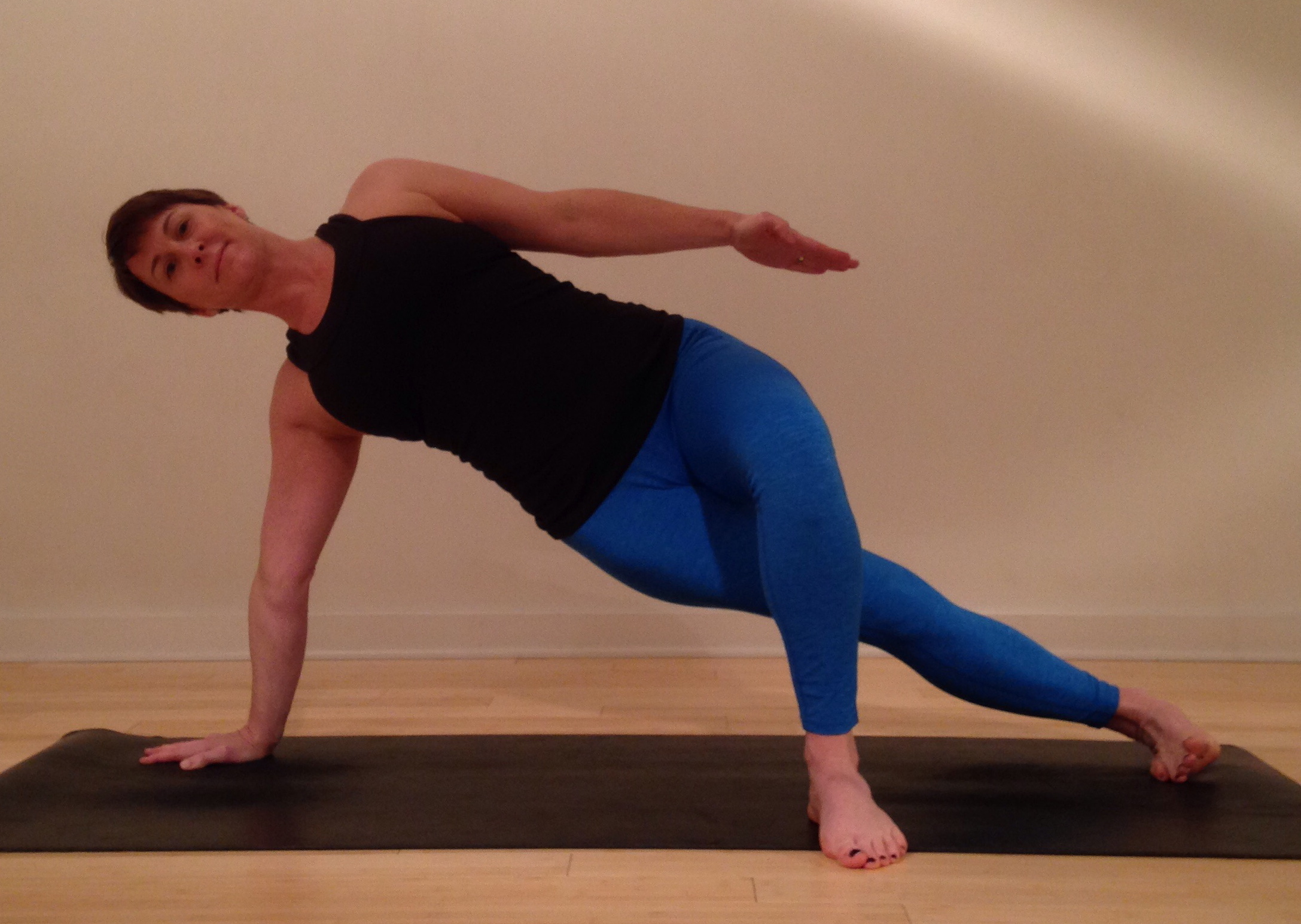
IMG_1097_2Option 1 – Kneeling.  From a kneeling posture, extend one leg and place the opposite hand on the mat.  Start with a side stretch, maximizing the length of the body.  Then, turning the heart to the ceiling, reach the arm away to maximize the stretch and openness in the chest.  Keep the grounded shin and extended leg active.  Notice if there are any issues or discomfort with the supporting shoulder.

IMG_1101_2Option 2 – Three-Legged Hip Opener.  From downward facing dog, lift one leg, bend the knee, then stack and open the hips. Hug the heel to the glute and raise the knee as high as you can to open the hip flexor and quad.  Work with both keeping the shoulders square and turning them toward the side wall.  Find balance and grounding in this asymmetrical configuration.

IMG_1104_2Option 3 – Preliminary Wild Thing.  When you are ready, continue to reach the raised foot until you come to fingertips, then teeter off the hand on the same side.  Reach the foot to the mat about mat width.  If the hips or heart dipped during the transition, lift them toward the ceiling.  As much as the shoulder allows, turn the heart toward the ceiling, reaching the heart into the hand.  To exit, sit the hips down or flip back to three-legged dog.

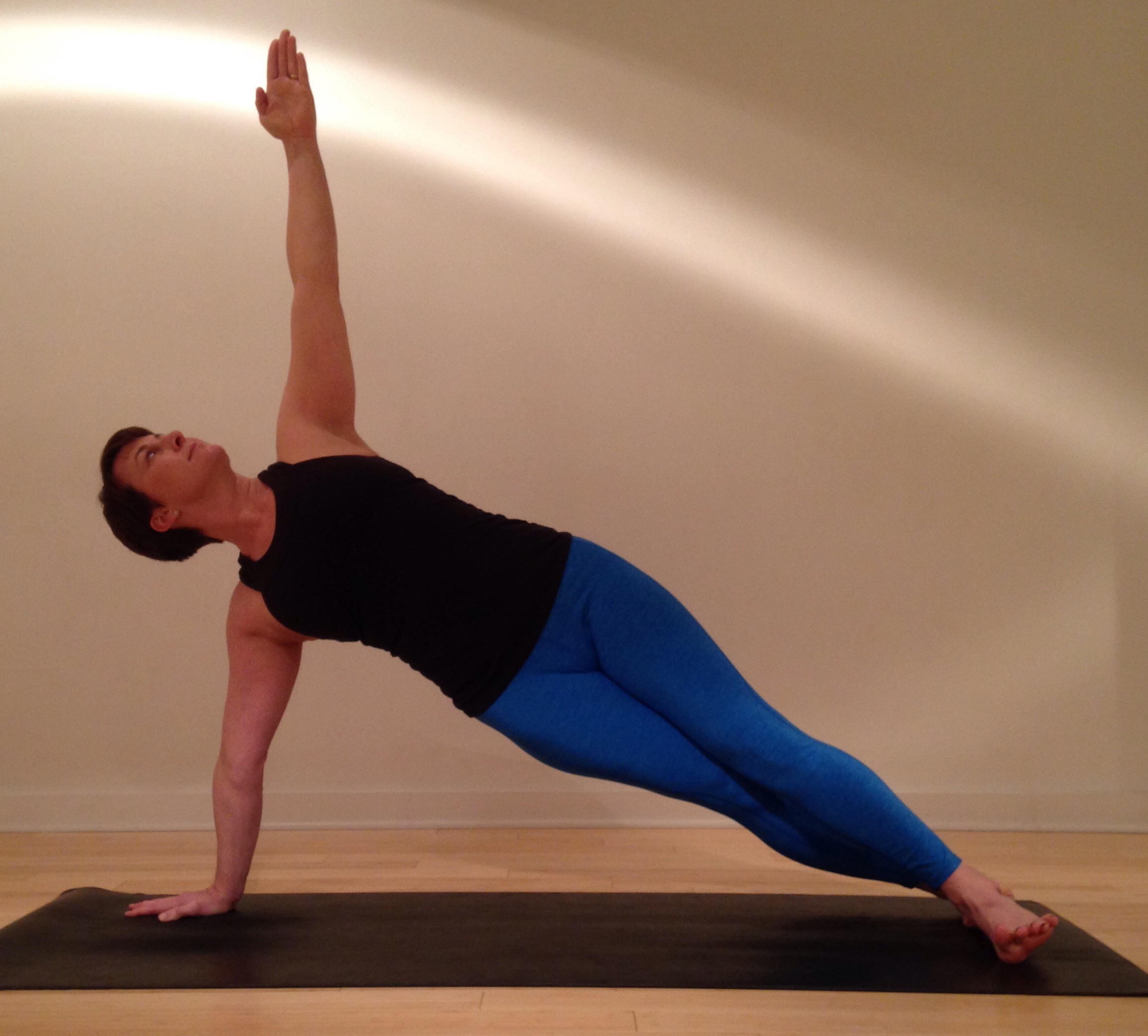
IMG_1113_2Option 4 – Full Extension – As you progress, work to keep the supporting leg straight, and keep the lift of the heart and hips as you flip.  The foot of the leg that flips will ground on the the ball of the foot with a big lift of the heel.  Reach the arm overhead to accentuate the backbend.  The reaching hand can be held in jnana or chin mudra, symbolic of yoga in action or the union of mind, body, and spirit.  Bask in the estatic opening of the heart.

It’s hard to feel ecstatic if you are struggling or fighting, so be mindful to work where your can relax and breathe in the pose. Follow along @suzannewrightyoga on Instagram or at Suzanne Wright Yoga on Facebook.  If you post your pictures or about your experience be sure to tag #PowerPose and @suzannewrightyoga.
1 Comment

#PowerPose 17 – Vasiṣṭāsana

One of the great benefits of practicing yoga is creating or improving the strength of the core.  The core of the body is more than just the abs, but really the entire torso of the body and upper legs.  A strong core promotes good posture (thanks mom!), allows organs ample room to function, creates balance and stability, and energizes daily tasks.  Many yoga poses that we practice contribute to the strength of the overall core like High Plank, Tāḍāsana, Śalabhāsana, and this week’s pose Vasiṣṭāsana.

Vasiṣṭāsana or Side Plank Pose requires the full body activation of High Plank and an integrated balancing arm.  In all of these variations, the belly lifts towards the spine, the back is long, and the serratus anterior or the muscle just below the armpit is activated.  To find this muscle, hold your elbows out wide and try to hug your armpits closed without moving your elbows.  They won’t close, but you should feel the activation of the side body.

Try these variations to build strength and stability in Side Plank:

IMG_1042Option 1 – Top Leg Support.  Actively engage the shoulder in the socket.  The shoulder should not protrude from the socket or dump into the back, rather the shoulder blade is pulled onto the back body so that you feel all of the surrounding muscles engaging to create stability.  Grip the mat with a strong bottom hand.  Walk the top foot, so it is in line with the hip providing support for the lower body.  Keep the hips lifted, creating one line from the bottom foot to the crown of the head.

IMG_1044_2Option 2 – Crossed Legs.  When the balancing arm and shoulder feels secure, step the top foot back and place it in front of the bottom foot, crossing the calves.  Scissor the legs together, activating the inner thighs.  Keep the feet flexed, balancing on the blade edge of the bottom foot and the arch edges of the top foot.  Reach the tailbone toward the heals without tucking.

IMG_1045_2Option 3 – Stacked Feet.  Keeping the alignment of the crossed leg variation, stack the top foot directly on the bottom foot.  The feet stay flexed as if there is a board or a block underneath them.  For added challenge, take the arm overhead in line with the body and take the drishti or gaze to the hand.

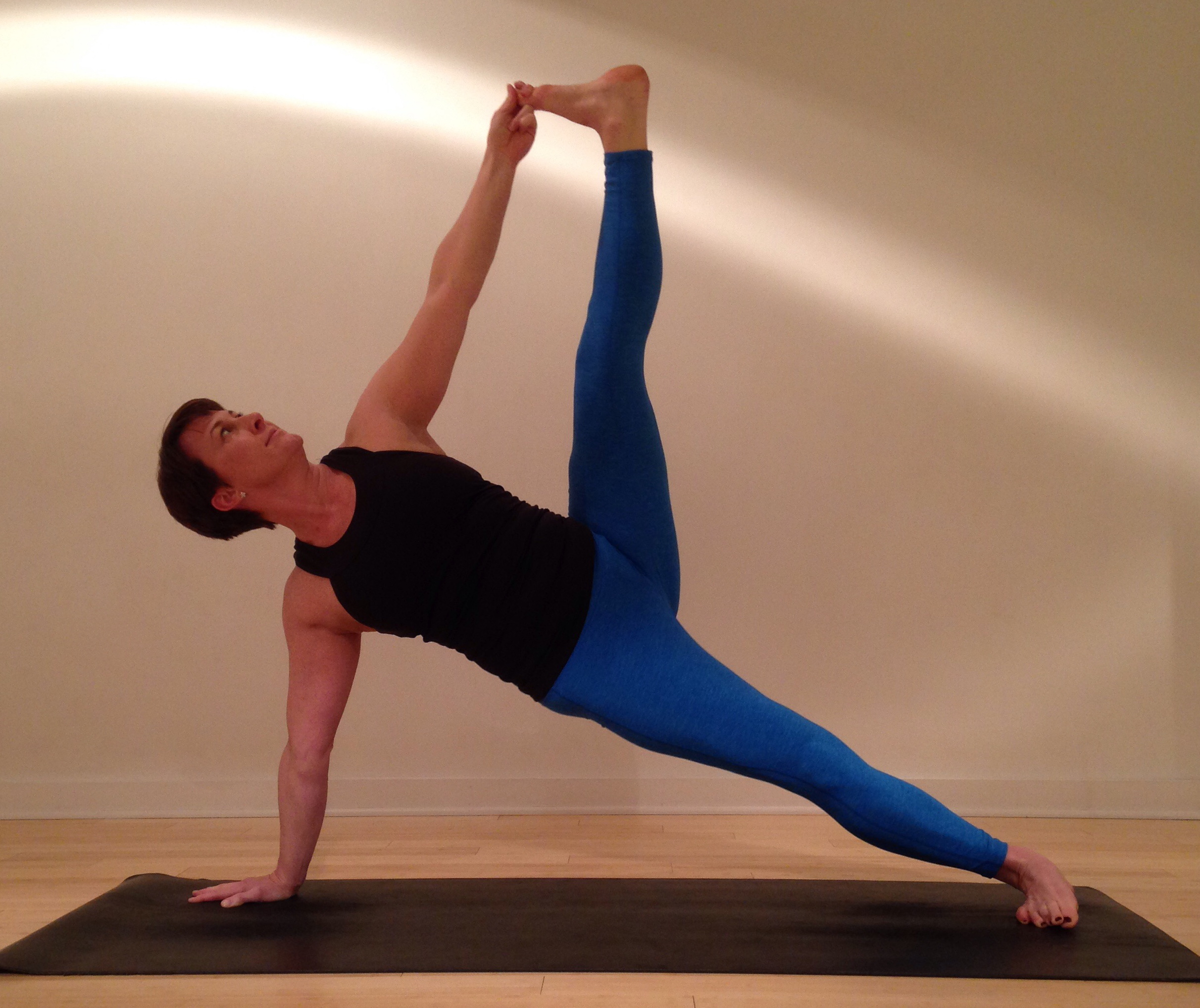
IMG_1049_2Option 4 – Variations with Bottom Foot Grounded.  Once you are stable in a full side plank posture, there are many variations that can be explored.  In all of the variations, the bottom foot begins to reach to the floor, eventually grounding all four corners of the feet.  This requires a lot of flexibility and stability in the bottom ankle, so work to reach the arch edge of the foot toward the floor.  This extra grounding creates a more stable and versatile posture.  Try bringing the top leg into a tree position or bending the knee and reaching back for the top of the foot.  Another variation is to add uttitha pādānguṣṭāsana or an extended big toe hold (pictured).

In addition to strengthening the core, Side Plank Pose can be a very empowering and grounding posture.  Be kind to and mindful of your shoulders as you explore the different variations of this pose.  Follow along @suzannewrightyoga on Instagram or at Suzanne Wright Yoga on Facebook.  If you post your pictures or about your experience be sure to tag #PowerPose and @suzannewrightyoga.

Leave a comment

#PowerPose Week 16 – Aṣṭāvakrāsana

Aṣṭāvakrāsana, the pose dedicated to the sage of Aṣṭāvakra or Eight-Angled Pose is our peak pose for this power pose series.  Parsva bakasana, eka pada śīrṣāsana, and paripūrna nāvāsana prepare us for this posture, but there’s more to the pose than meets the eye.

Aṣṭāvakra was wise man and a scholar, but because of a curse, he was born with a crippled, crooked body and needed a cane to walk.  It’s the classic story of “don’t judge a book by its cover”.  He entered the king’s court to join in the discussions about the Vedas, but because of his outward appearance he was discounted and ridiculed.  Aṣṭāvakra humbled the king and his court, pointing out that they could only see the surface, not the essence or soul of a person.  At this, the king realized his error and became Aṣṭāvakra’s student.

The pose dedicated to the sage is challenging, but don’t let the end pose or the appearance of it define your journey.  Everyone’s yoga journey, as well as their poses will be different and personal.  It’s the heart of the yogi, the essence or the soul that really matters.  The pose is a reminder to not be guided by the outward appearance of people, rough and worn or bright and shiny.  What you see on the outside does not define a person.  Heart, compassion, and integrity are much better indicators of a person’s true character.

As you practice the stages of this pose, remember that it’s what’s inside that’s important, the external pose is just a test of our character and how we meet challenge.

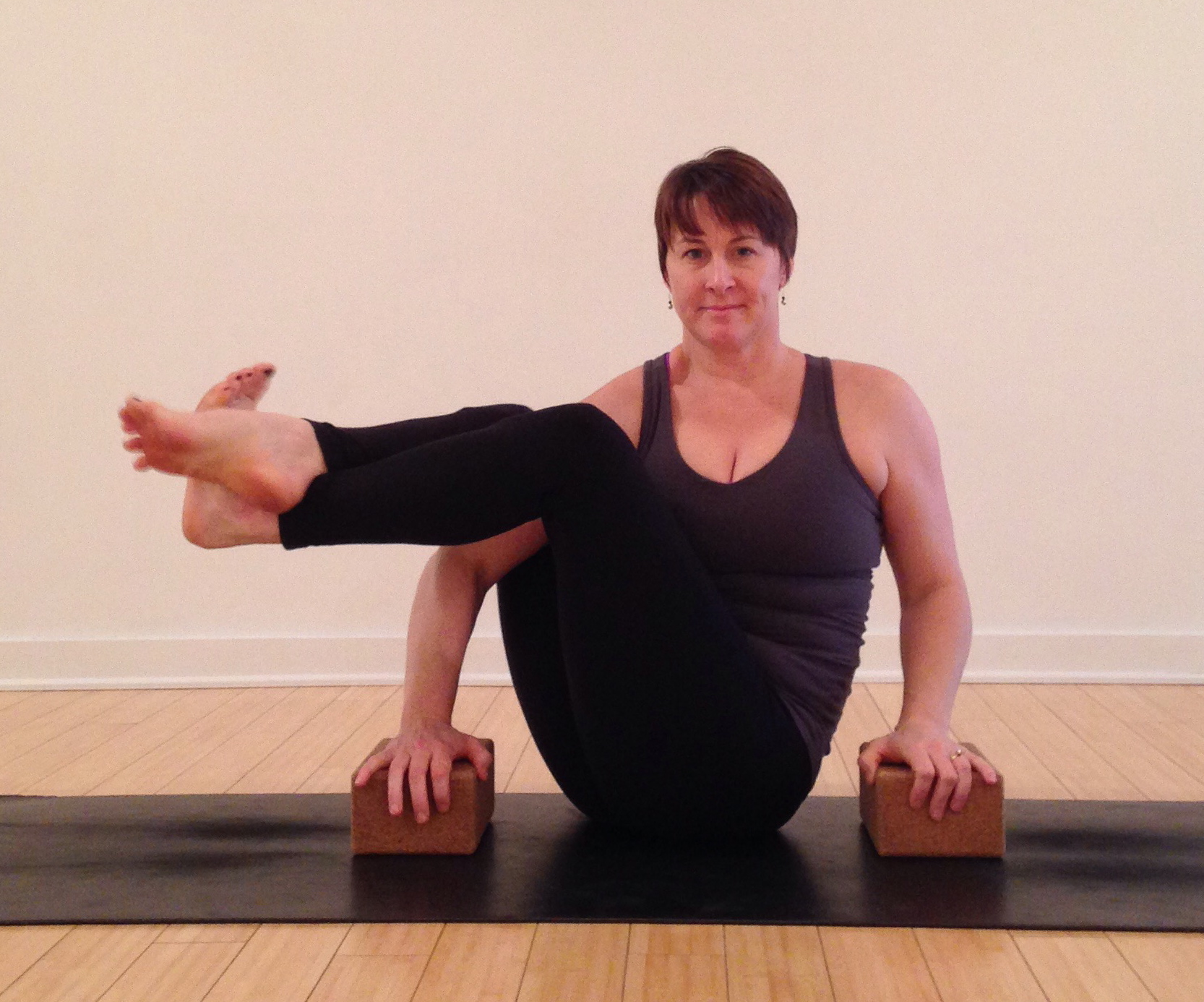
IMG_0947Option 1 – Ankles crossed.  Starting from Eka Pada Śīrṣāsana Prep or leg behind the shoulder, cross the ankles.  With hands on blocks next to the hips, hug the elbows toward the body, maintaining a caturanga shape in the arms.  Twist the torso, opening the heart, reaching the collar bones and shoulder heads broad.

IMG_0950Option 2 – Extend the legs.  Begin to extend the legs, sandwiching the tricep between the thighs.  Squeeze the tricep as you reach the feet away.  Press through the balls of the feet.  Continue to twist the torso.  Be sure to keep the thighs above the elbow.  If this is not available, continue to work on the opening of the hip.

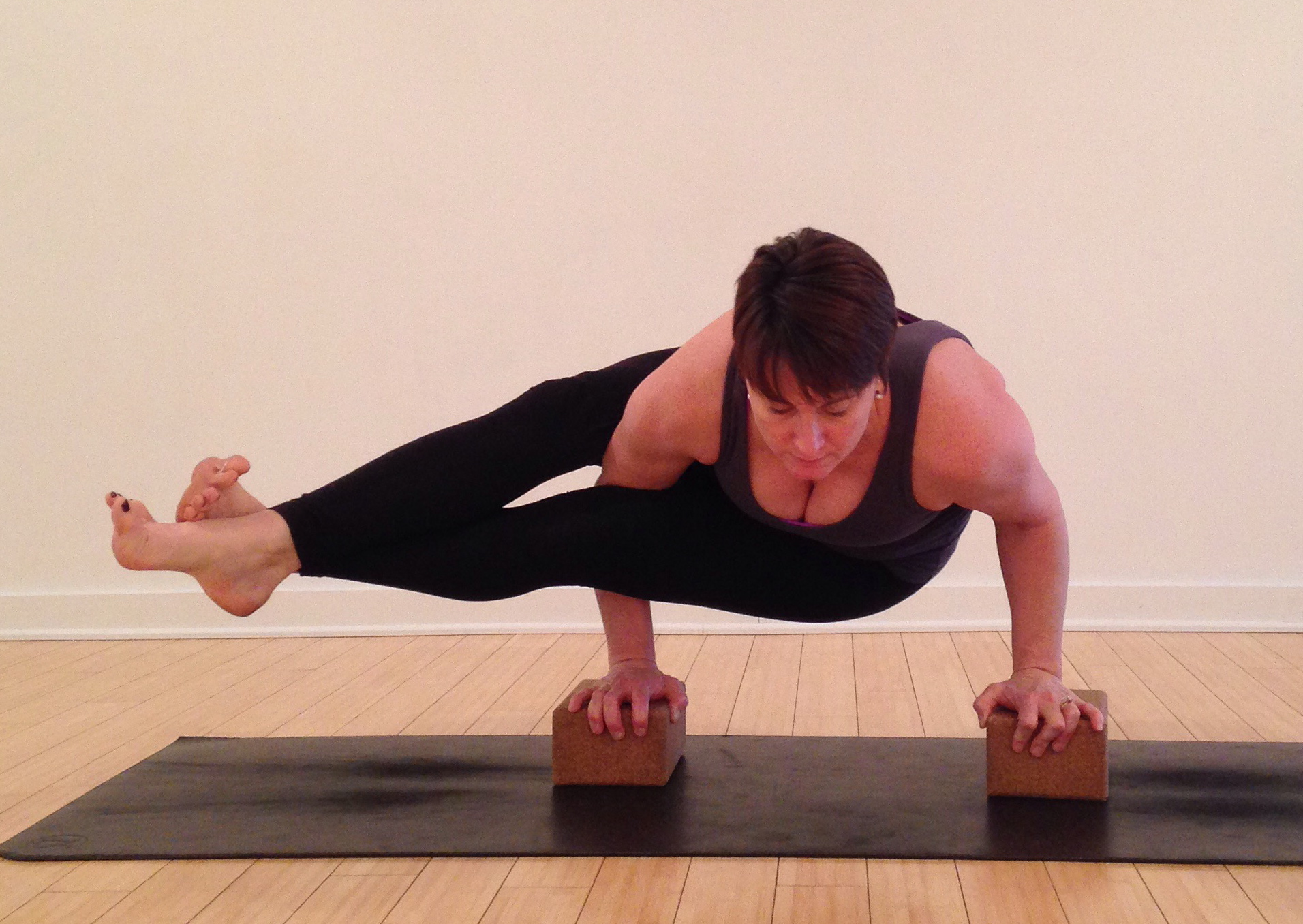
IMG_0954_2Option 3 – Lift from the floor.  Press firmly into the blocks and shift the heart forward.  Elbows will bend at 90* as they hug to the midline of the body without collapse.  Hold the tricep firmly with the thighs, reach the legs and feet long out to the side.

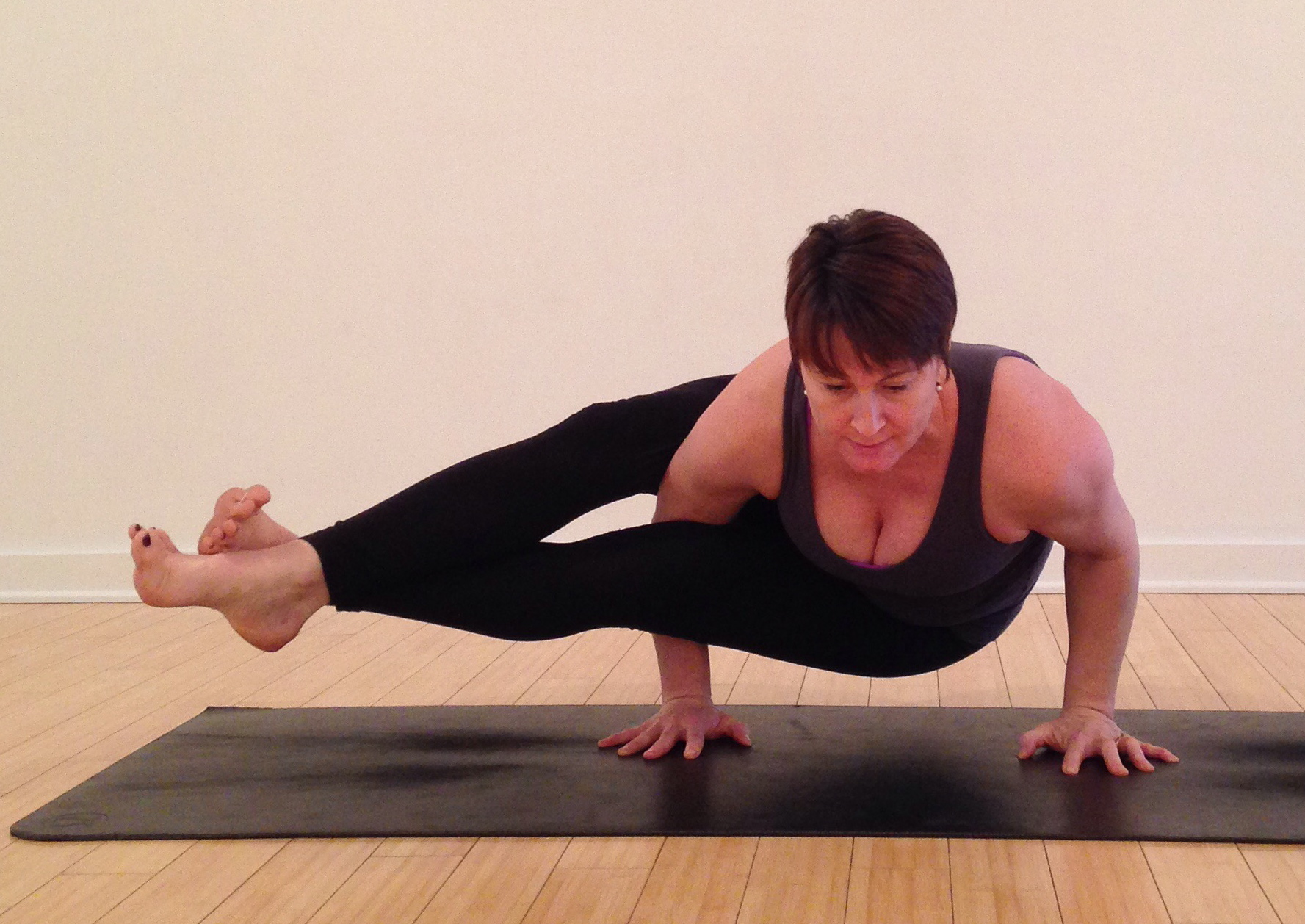
IMG_0959_3Option 4 – Aṣṭāvakrāsana.  When the wrists are ready to support the body, remove the blocks and place the hands firmly on the ground.  Press into the floor to lift as the heart is pulled forward.  Lift the belly away from floor, making the pose buoyant.

When you are able to deconstruct this pose, you may find that it can be easier than it looks.  Open your heart to the possibility that the pose is difficult because that is our perception and predetermination.  In time and with practice, it all comes together.

Follow this weekly challenge @suzannewrightyoga on Instagram or at Suzanne Wright Yoga on Facebook.  If you post your pictures or share about your experience be sure to tag #PowerPose and @suzannewrightyoga.