If you happen to find yourself in quicksand, do not struggle or flail, you’ll only make matters worse. Instead, find your composure, something to leverage, and you’ll have a chance of making it out in one piece. This is such a great metaphor for life. Have you noticed that most times struggling and flailing only makes matters worse? Conflicts, by nature, carry with them stress and volatility. Isolating that energy to the conflict and not assuming it can be the best strategy for enduring it. Sure, there can be a sense of urgency and attention when necessary, but just because there is drama, doesn’t mean it has dictate your state.
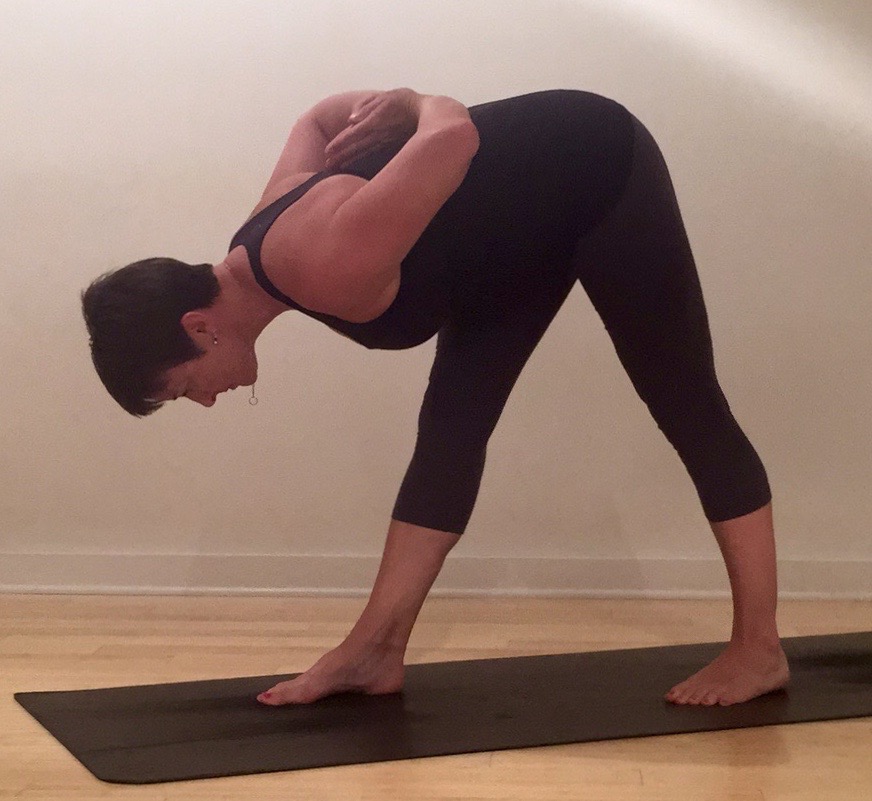
For me, this concept is perfectly illustrated by binding postures. I’m not naturally open through the shoulders, so binding is something that I’ve had to work through over time. (I’ve spent lots of years holding tension and tightness in my shoulders, it will probably take lots of years to release it.) When I struggle, flail, or try to “muscle” my way to a bind I only make matters worse. When I can step back, find composure, and relax around the process I actually can make some progress.
This week’s PowerPose, Pāśāsana or Noose Pose is a perfect ground for exploration. Just as a noose or cord can bind you to something good, if you struggle and fight, it can become too tight and constricting. For, yogis who are not naturally inclined to bind, this one might take a while. It requires that the shoulders are mobile and open, a big twist through the torso, and willing calves and Achilles tendons.
Try these variations of Pāśāsana as you relax around the work and find some leverage to move towards the bind.
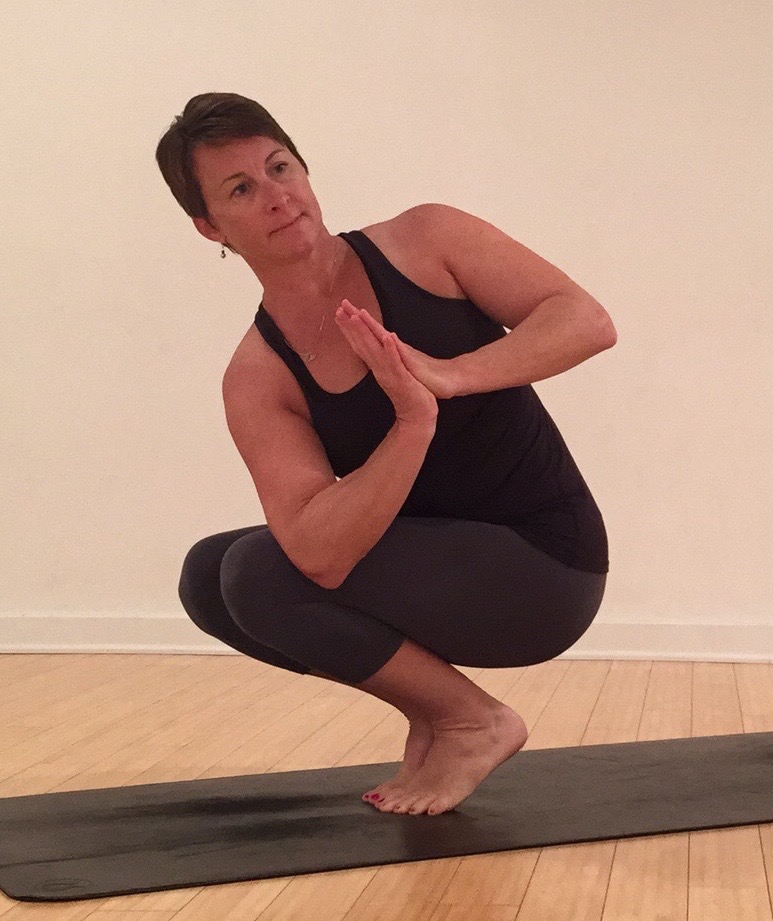 Option 1: Toe Squat with a Twist. With the feet together, squat down bringing the tail toward the heels. Keep the heels as heavy as possible. Someday they will ground to the floor. Hug the feet and knees together as you find balance. With a long spine, twist, taking the opposite elbow to the thigh. Use the elbow to press the legs away. Press the top hand down to deepen the twist. Work to center the thumbs to the sternum, and to broaden the collarbones. Breath fully into the constriction of the twist.
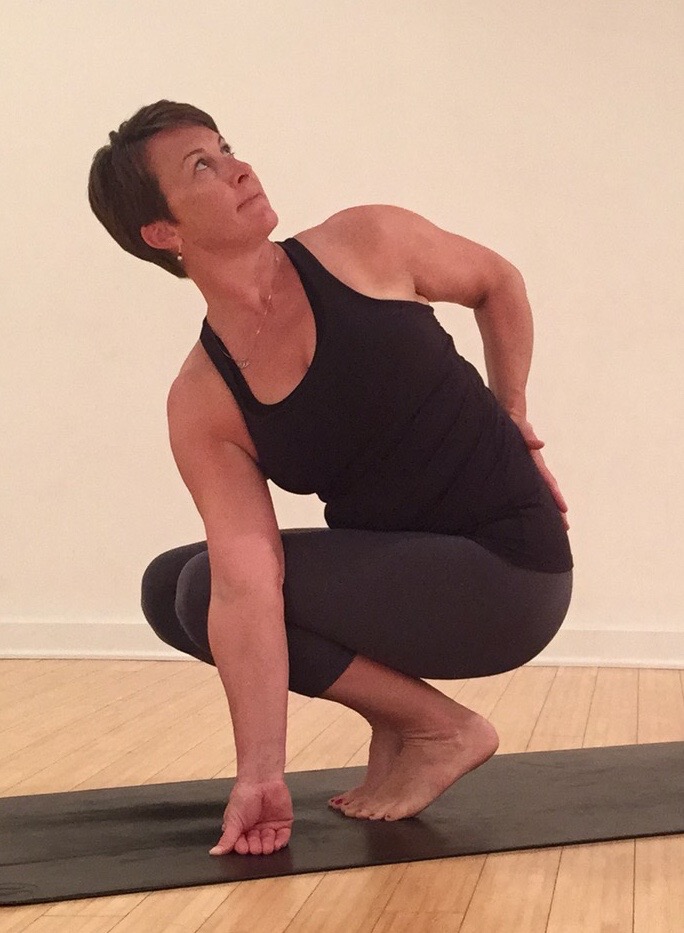 Option 2: Toe Squat with Pre-Bind. From Option 1, fly the arms open. Keep the tricep anchored on the thigh to maintain the twist. If you lose your leverage, take the hands back together until you can fly the arms open without losing the twist. Take the top hand to the hip. Roll the top shoulder away from the ear and press into the hand to deepen the twist. Take the gaze up if the neck allows.
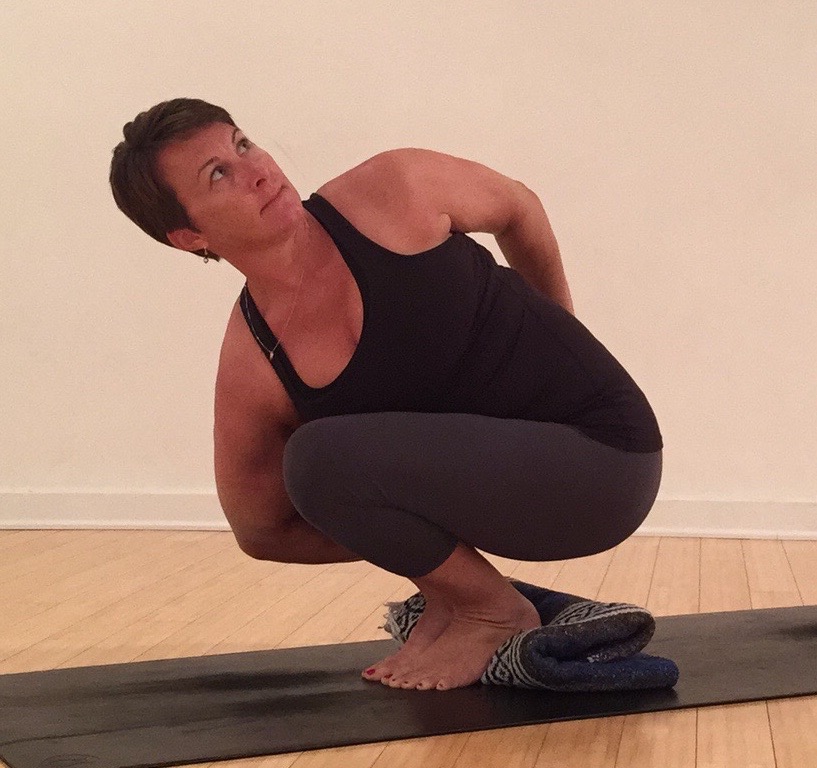 Option 3: Bind One Leg. Take the bottom arm between the legs and anchor the tricep on the inner thigh of the leg. Press into the twist. With the bottom hand reaching down, point the thumb behind you, bend the elbow and reach the hand toward the same hip. At the same time, the top hand reaches up and behind to find the hip or the opposite hand. If the hands are unable to meet, use a strap or a binding ring to bridge the gap. Hug the knees towards one another as you work to expand the heart in the bind. If balance is unstable or there is too much pressure on the calves and Achilles tendons, use a blanket under the heels.
 Option 4: Bind Both Legs. From Option 2, keep the tricep anchored on the thigh and reach the bottom forearm across the shins, to the hand can reach behind. The top hand drapes and wraps around until the hands meet. Use a strap or a binding ring to bridge the gap. In the full expression of this posture, the heels are grounded to the floor, the torso maintains a deep twist, and the hands clasp for the bind.
As you practice, check in regularly to see if you are relaxing around the process or struggling and flailing. If it’s the latter, step back, compose yourself, then adjust the practice to the right level of challenge.
Follow this #PowerPose challenge @suzannewrightyoga on Instagram or at Suzanne Wright Yoga on Facebook. If you post your pictures or about your experience be sure to tag #PowerPose and @suzannewrightyoga.


 suzanne wright yoga