
#PowerPose 30 – Bhujapīdāsana
Pressure is sometimes a dirty word. Sure there are times where there is too much or too little, but with everything else, when there’s just enough, great things can happens. With the right amount of pressure, time, and carbon, we get diamonds. With focus and time we get brilliant results.
This brings us to this week’s PowerPose, Bhujapīdāsana or Shoulder Pressure Pose. Another wonderfully awkward posture, this arm balance requires a strong foundation of the hands, open hips, and Uḍḍiyāna Bandha. According to Iyengar in Light on Yoga, “The various parts of the body supply the weights and counterweights. All that is needed is strength of will.” That strength of will can be explored with focus and time.
Try these variations and stages of Shoulder Pressure Pose:
 Option 1 – Bhujapīdāsana Prep. Forward fold with the feet just wider than hip distance. Soften the knees for maximum fold. Reach the hands between the legs to the ankles and use them for leverage to shimmy the shoulders behind the knees. Walk the feet closer together, a left to right rocking motion may facilitate this. Slowly lift the hips as you gently squeeze the knees into the shoulders. Keep the collarbone as open as possible. Engage Uddiyana Bandha, the energetic lift that starts with the up and in muscular lift of the belly.
 Option 2 – Sit Back. Place blocks behind you. Reach the hands to the blocks. Draping the fingers over the edge can promote comfort in the wrists as they build strength and mobility. Bend the elbows to create a shelf, as you do slide the hips back to rest on the shelf of the triceps. Lift through the belly, keep the heart reaching forward. Start to bring the toes together to touch. Explore the weights and counterweights of the body.
 Option 3 – With Blocks. Keeping the thighs on the triceps or on the shoulder, cross the legs at the ankles. Balance solely on the hands. When the wrists are ready, remove the blocks and take the hands flush to the mat. It is common to fall back and land on your tail and it’s an important step to learn this balance. Switch the cross of the ankles as you practice to promote symmetry.
 Option 4 – Bhujapīdāsana. When you are able to keep your balance, begin to press the ankles together and reach the feet long. Imagine that the legs can go completely straight. Be mindful not to collapse the shoulders under the pressure of the legs. Work to find the perfect balance of contraction through the belly and expansion through the legs and heart. To come out of the pose shift forward, releasing to a forward fold.
There comes a point in asana practice where it’s less about flexibility or form and more about the “strength of will”. Showing up to practice, taking the practice off the mat, and then getting up and doing it again and again is a true measure of strength. It’s not about if you can get into these wonderfully awkward shapes. That just makes it all a little more interesting.
As you test and strengthen your will, work where you are safe and at the right level of challenge for you. Follow this #PowerPose challenge @suzannewrightyoga on Instagram or at Suzanne Wright Yoga on Facebook. If you post your pictures or about your experience be sure to tag #PowerPose and @suzannewrightyoga.
#PowerPose 29 – Kūrmāsana
In the story of the Churning of the Milky Ocean, the gods and demons work together to bring up the amṛta or nectar of immortality from the bottom of the ocean. Vishnu the preserver, takes the form of a tortoise, so the churning rod has a strong and stable platform. Using a snake to propel the churning rod, the motion first produced a deadly poison. To save the world, Shiva swallowed the poison and held it in his throat. The churning continued and many amazing rewards were produced including Kaustubhamaṇi (an unmatched jewel), the goddess Lakṣmī, and the amṛta. There are many lessons and insights that can be taken from this story. One is that you have to do the work to get to the reward. Many times that means dealing with difficult and potentially debilitating obstacles. But, if you persevere, if you put in the work, the rewards will come and they will be more plentiful than you expected.
Kūrmāsana or Tortoise pose requires open hips, open shoulders, open hamstrings and Uḍḍiyāna Bandha . Uḍḍiyāna Bandha starts as a muscular lift of of the belly in towards the spin and upwards. What starts as a physical lift of the muscles transforms into an energetic lift of energy from the core of the body upward. Harnessing this energy is what really makes our arm balance and flying postures like crow catch air and soar. In each of these variations and stages focus on the inward and upward lift of the belly.
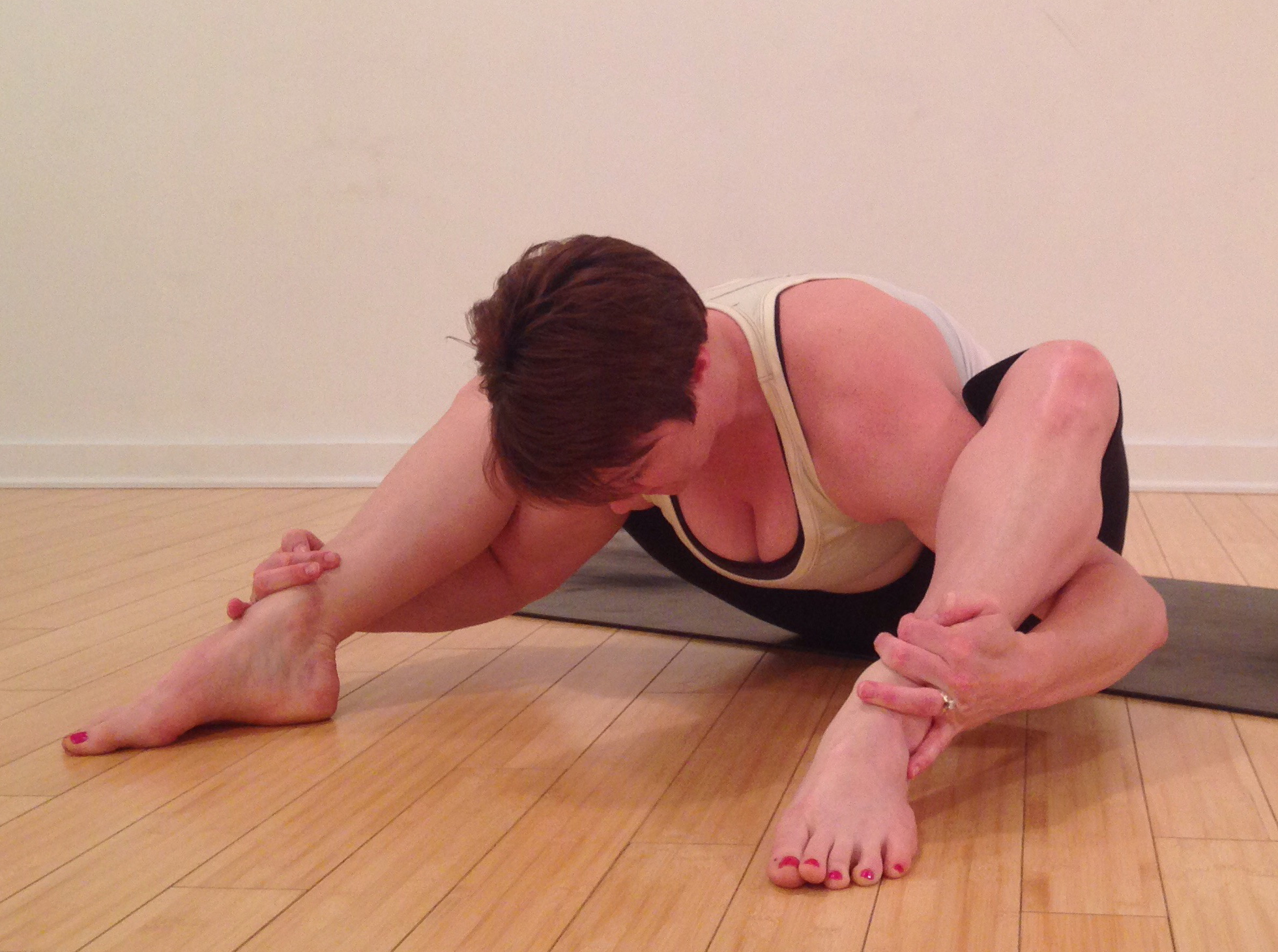 Option 1 – Kūrmāsana Prep. From a seated posture, take the legs wider than shoulders. Soften the knees and snuggle the biceps behind the thighs. Reach the hands to hold the tops of the ankles. Use the hands to gently pull on the ankle reaching a little deeper into the pose. Broaden the collarbone while lifting the belly away from the floor. The head can be held in line with the spine or allow it to gently hang.
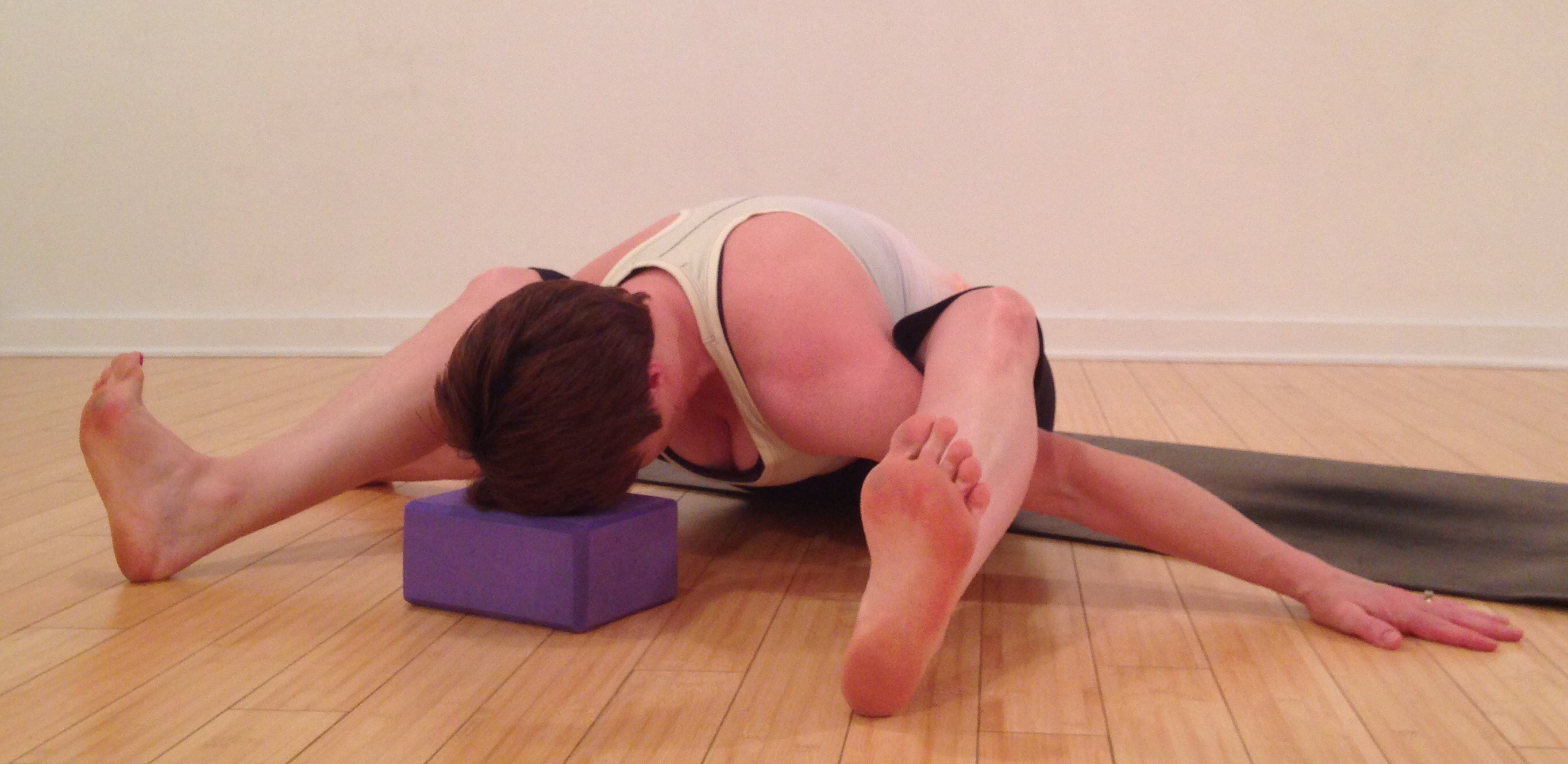 Option 2 – Block Support. From Kūrmāsana Prep, reach the arms wide pressing the hands to the floor in line with the shoulders. Flex the feet and begin to slide the legs toward straight. Make sure the elbows are outside of the thighs, so the thighs press down on the biceps. As the legs straighten the torso is pulled towards the floor. When you find a good spot to work and breathe, use the block for support under the forehead.
 Option 3 – Kūrmāsana. Continue to reach the legs until they are completely straight. Let the heart rest on the ground. Start with the forehead to the ground and when the neck allows, lift the head and rest the chin on the floor.
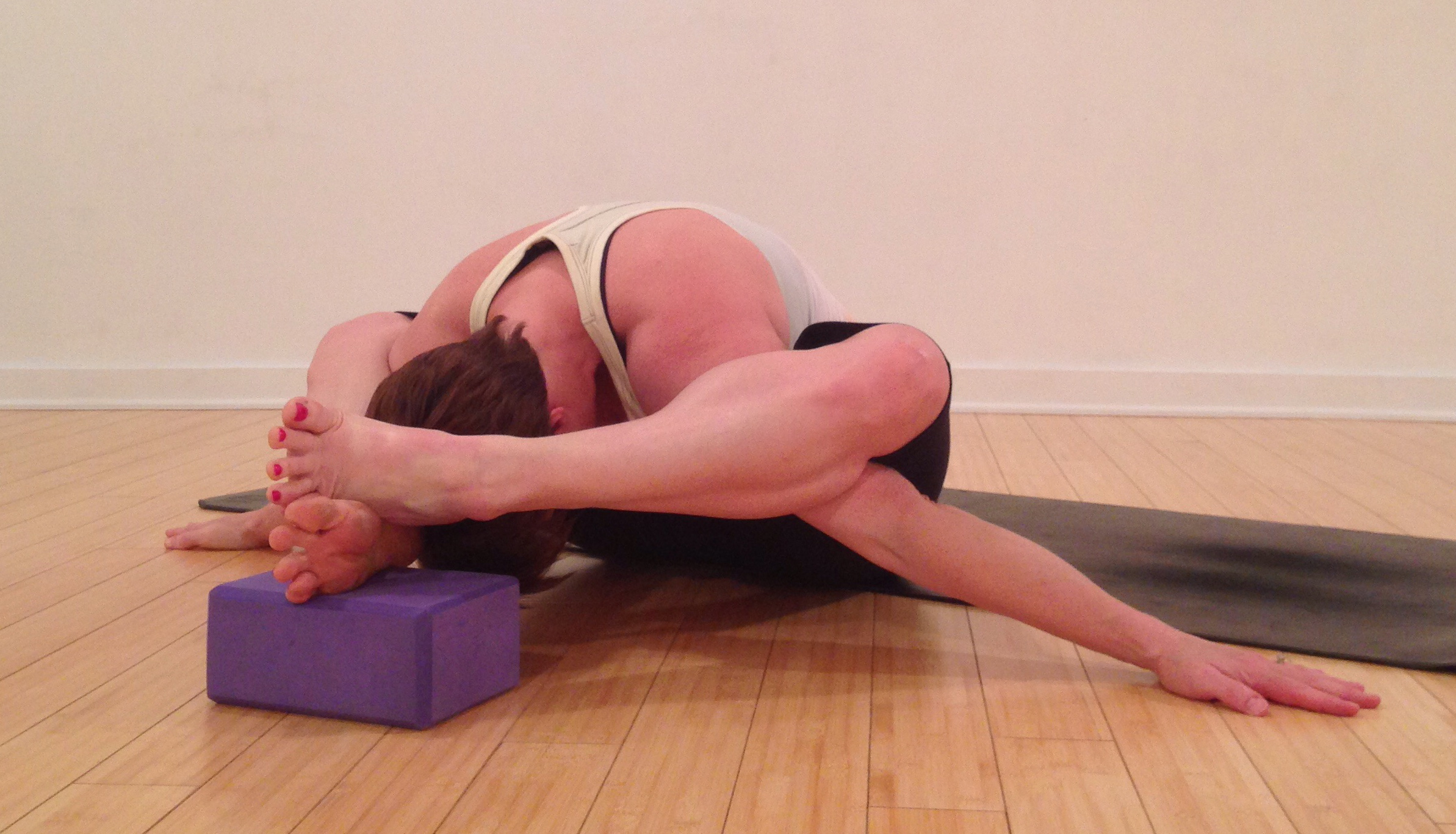 Option 4 – Supta Kūrmāsana Prep. To draw the tortoise into the shell, walk the feet toward one another and cross at the ankles, eventually, the feet cross above the head, allowing the forehead to rest on the floor. Here, the block is used to support the feet, allowing space for the and chest to melt toward the floor. When you are able to maintain this posture, reach the hands behind the back to bind. Be sure to switch the cross of the legs as you practice to cultivate symmetry. As you draw the limbs inside, take an opportunity to withdrawal mind from stimulation to create peace and calm.
This pose is wonderfully awkward, but when you can find a peaceful seat, tortoise is incredibly grounding, nurturing, and preserving. The key to getting the reward from the practice is to work where your body is safe and at the right level of challenge for you. Follow this #PowerPose challenge @suzannewrightyoga on Instagram or at Suzanne Wright Yoga on Facebook. If you post your pictures or about your experience be sure to tag #PowerPose and @suzannewrightyoga.
 suzanne wright yoga